

In the winter of 1912, Robert Frost was thirty-eight years old, unknown, and running out of time. He had been writing poetry for two decades but had published almost nothing. His farming in New Hampshire had failed. His teaching jobs had come and gone. He had a wife, four children, and a growing sense that the life he had imagined for himself was not going to come to pass. He sold the farm, borrowed money, and sailed with his family to England, a place where he knew no one and had no prospects, on the theory that obscurity in a new country was at least a change of scene. Within two years, he had published two collections, A Boy's Will and North of Boston, been taken up by Edward Thomas and Ezra Pound, and returned to America famous. He was forty years old. The decades of failure had given him everything he needed, and the poems he brought back from England were already among the finest in the language.
For Robert Frost, the most celebrated American poet of the twentieth century, rural landscapes were never simply backdrops. They were mirrors of human struggle, arenas where questions of choice, mortality, isolation, and endurance came to life with an immediacy that more obviously ambitious poetry rarely achieves. With deceptively simple language rooted in the rhythms of everyday speech, Frost turned local scenes into universal meditations, poems that continue to resonate with readers far beyond the New England hills that inspired them. Born in 1874, he rose from that long obscurity to win four Pulitzer Prizes, an achievement unmatched by any other poet, for works including New Hampshire, Collected Poems, A Further Range, and A Witness Tree. Poems such as "Stopping by Woods on a Snowy Evening," "Mending Wall," and "The Road Not Taken" became touchstones of American culture, often quoted for their apparent simplicity yet layered with irony, ambiguity, and a darkness that the casual reader can miss entirely.
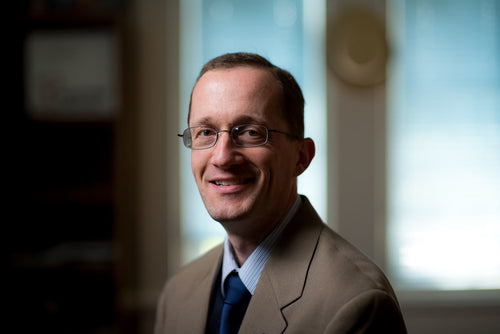
To understand Frost fully requires peeling back the myth of the genial New England farmer-poet and recognizing the more haunted undercurrents running beneath the pastoral surface. Few have done this with greater sensitivity than Jay Parini, acclaimed poet, novelist, critic, and biographer, whose biography of Frost, alongside his studies of Steinbeck and Faulkner, has helped reframe how we see these figures: not as monuments but as flawed, deeply human artists shaped by forces they could not always control and losses they never entirely absorbed.
In the conversation that follows, Parini reflects on Frost's enduring power, exploring the shadowed depths beneath the most familiar lines and tracing how a life marked by hardship and personal loss gave rise to a poetry of deceptive plainness that continues to unsettle, provoke, and inspire. For those who think they know Frost, what emerges is a more complex portrait: one of America's greatest poets, whose darkness is as instructive, and as carefully made, as his light.
Charles Carlini: In March 2000, you published the biography Robert Frost: A Life, the result of a 20-year research process. Did you know going in that it would take so long to finish the book? What first drove you to begin studying Frost, and why did you continue to explore him over the years?
JP: I never imagined I would dwell on Frost for a quarter of a century—as I did. I began rooting around in his papers when I first started teaching at Dartmouth in 1975. I started interviewing people who knew him then. I wrote various chapters at various times, stopping for long periods to do other things, circling back to Frost, as he was always my favorite poet. He still is. I find myself drawn to his voice, the wry humor, the skepticism, and faith that mingle in odd ways, the rich sense of place, the wit, and originality.
CC: Frost’s wasn’t the first biography you wrote: in 1995, you wrote John Steinbeck: A Biography, as well as several others since then. Were you working on Frost and Steinbeck’s biographies simultaneously? How did your experience with Steinbeck’s biography assist you in writing Frost’s?
JP: I had started the Frost, and then dropped him to write the Steinbeck, which I did very quickly, as there was some pressing thing from his English publisher—the book was meant to accompany a new British edition of Steinbeck's novels. So I powered through it, and I learned a good deal about writing a biography by working on the Steinbeck. It really helped me with the work on Frost, which I resumed in the mid-90s.
CC: You’re not only a biographer, but also an active poet yourself. Has Frost’s work had any influence on your own poetry?
JP: Absolutely. My own work from the beginning has been deeply influenced by Frost, as well as Theodore Roethke, Seamus Heaney, Charles Wright, Philip Levine, and Charles Simic. But I think my response to Frost has deeply shaped my own poetic vision.
CC: Jeffrey Meyers and Lawrance Thompson have previously written about Robert Frost in biographies of their own. The latter was Frost’s disciple, and his account of Frost was notoriously negative. How does your view of Frost differ from theirs? Was there any accuracy in Thompson’s claims?
JP: I wrote about this at length in the epilogue to my biography, so I don't want to reiterate all of that. I would just refer readers to that longish epilogue, where I talk about Thompson and Meyers, and my problems with their view of Frost. Both are seriously problematic.
CC: The epitaph on Frost’s grave reads: “I had a lover’s quarrel with the world.” What did Frost mean by this?
JP: A lover's quarrel is one that is affectionate. Frost had serious doubts about the human condition, as in "The Most of It," which begins: "He thought he kept the universe alone." Frost felt alone at times, yet he confronted the solitary nature of experience with grit and humor. Lovers do that as well.
CC: Throughout his career, Frost was highly competitive, and he even admitted to feeling jealousy towards his fellow poets. Was Frost insecure about his own work?
JP: All artists live with insecurity, and Frost was no exception. He was adamant about his gifts, sure of his talent, but he knew that the marketplace of readers is precarious and that it was no guarantee that he would find the right readers. But good work finds good readers, in whatever numbers, in time.
CC: What are some of the common criticisms of Frost’s poems that you’ve encountered? As a poet yourself, would you agree with any of these critics?
JP: The main criticism of Frost is that he was too folksy and, in his lesser poems, cutesy. I think a poet should be judged by his best poems, and Frost is unusual in that he has written more than twenty or thirty major poems. Most great poets manage half a dozen. So, there is a lot to love in Frost, and it's very complicated stuff, too. Not easy reading, as so many readers assume without really taking the trouble to read him deeply.
CC: Although he’s often considered a rustic, rural poet, Frost grew up in Lawrence, Massachusetts. Is his urban upbringing at all represented in an otherwise rustic canon? How did his predominantly rural image develop?
JP: Frost decided to make himself a poet of northern New England. He wanted to "grow Yankier and Yankier," as he told a friend. He was born and raised in San Francisco and came late to Vermont and New Hampshire. He came as a convert, and he was the best member of the Church of New England Woods.
CC: Both Frost himself and his family suffered from mental illness, and given the number of loved ones he lost over the course of his life, it’s little wonder that Frost struggled with depression throughout his career. Can the effects of Frost’s depression and the tragedies he suffered be seen in his poetry?
JP: His poetry reflects the many dark moods that seized him, as in "Acquainted with the Night" or "Desert Spaces." So many of his poems register his terror and depression, his isolation and sense of despair. That is a major aspect or strain in his writing, and it defines him as a poet.
CC: As Frost’s biographer, which of his poems do you think best represent his work as a whole? Do you have any personal favorites?
JP: I like best "The Most of It," "Acquainted with the Night," "Directive," and some odd ones, such as "Provide, Provide." These show the deepest, darkest side of his nature, and they are marvelous to re-read. They can't be read. Only re-read.
Recommended Reading



0 comments