

On the morning of June 16, 1904, a twenty-two-year-old James Joyce walked through the streets of Dublin on what would become, in the hands of his mature imagination, the most celebrated single day in the history of literature. He had recently met Nora Barnacle, the Galway woman who would become his lifelong companion, and the city he was walking through with new eyes was also, he already sensed, the city he would spend the rest of his life leaving and returning to in his writing. Four months later, he and Nora left Ireland together, and Joyce would never live there again. He settled in Trieste, then Zurich, then Paris, teaching English, borrowing money, and writing about Dublin with an obsessive fidelity to detail that required him to write letters back to friends asking whether a man could walk from one specific street corner to another in under four minutes, whether there was a certain view from a particular window, and what time a particular pub opened its doors. The city he recreated from memory and correspondence across decades of exile is more real, more fully rendered, and more permanently inhabited than any city in fiction. He left Ireland and never stopped being Irish, which may be the most Irish thing about him.
The author of such literary classics as Ulysses and Finnegans Wake, James Joyce (1882–1941) was one of Ireland's most celebrated novelists, known for an avant-garde and relentlessly experimental style of writing that dismantled the conventions of fiction from the inside and rebuilt them according to principles he was largely inventing as he went. From the crystalline realism of Dubliners to the stream-of-consciousness revolutions of Ulysses and the multilingual dream logic of Finnegans Wake, Joyce produced a body of work that expanded what prose could do, and what it could hold, in ways that writers and readers are still absorbing more than eighty years after his death.
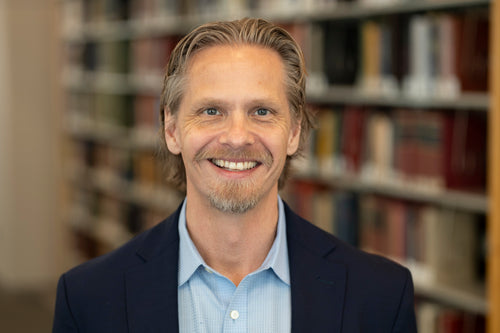
Few scholars have navigated that body of work with more sustained engagement or more genuine breadth than Michael Patrick Gillespie, Professor of English at Florida International University and Director of the Center for the Humanities in an Urban Environment. The author of eleven books and numerous articles on Joyce, Oscar Wilde, William Kennedy, chaos theory, and Irish film, Gillespie has spent his career illuminating the intersections between Joyce's experimental ambitions and the broader cultural, literary, and philosophical currents that shaped them. His anthology of early Joyce criticism, published as part of the University Press of Florida Joyce Series, and his ongoing work on an oral history of early Joyce studies and a book on Joyce and the experience of exile, reflect a scholarly engagement as wide-ranging and as restlessly curious as its subject.
In the conversation that follows, Gillespie guides us into Joyce's world, exploring the experimental ambitions, the Irish roots, and the experience of exile that gave one of literature's most demanding and most rewarding writers both his material and his method, and asking why a novelist who left Dublin in 1904 has never really left the conversation.
0 comments