

In 1959, Alfred Hitchcock summoned the composer Bernard Herrmann to a screening room and played him the shower scene from Psycho. Hitchcock had already decided that the scene would have no music. He wanted silence, he said, so the images speak for themselves. Herrmann listened, nodded, and went away. He came back with forty-five seconds of music for string orchestra, a shrieking, slashing arrangement of violins that he had written without permission and against explicit instructions. He played it to Hitchcock with the film. Hitchcock sat in silence for a moment and then agreed to use it. The music that Hitchcock had been certain the scene did not need has become so inseparable from the scene that it is now impossible to imagine one without the other. It is among the most recognizable pieces of film music ever composed, and it exists because a composer ignored his director's instructions and a director was honest enough to recognize that he had been wrong. Hitchcock later said that thirty-three percent of the effect of Psycho was due to the music. Those who have seen the shower scene will suspect the figure is conservative.
The undisputed master of suspense, Alfred Hitchcock (1899–1980) was an iconic film director and producer of more than fifty movies, including Dial M for Murder, Vertigo, North by Northwest, Psycho, and The Birds. The techniques he pioneered inspired a new generation of filmmakers and revolutionized the thriller genre, demonstrating that cinema's greatest power lay not in what it showed but in what it withheld, not in shock but in the unbearable anticipation of it. Yet behind the mastery of the visual, behind the precise manipulation of the camera and the audience, lay an equally sophisticated understanding of something less often discussed: the role that music played in creating the emotional architecture of his films.
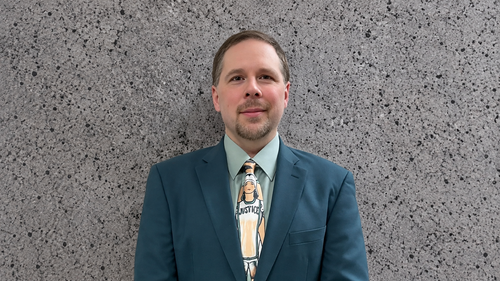
It is precisely this dimension of Hitchcock's genius that Jack Sullivan, Professor of English at Rider University, has spent his career illuminating. The author of several books, including New World Symphonies: How American Culture Changed European Music and Hitchcock's Music, Sullivan brings to his subject both deep musical knowledge and a film scholar's understanding of how sound and image work together to produce effects that neither could achieve alone. His work reveals a Hitchcock who was not merely tolerant of his composers but profoundly engaged with music as a dramatic tool, a director who understood that the right notes at the right moment could do things to an audience that no camera movement could replicate.
In the conversation that follows, Sullivan guides us into the sonic world of Hitchcock's cinema, exploring the collaborations with Herrmann, Dimitri Tiomkin, and others that gave the films their distinctive emotional texture, and asking why a director so famously in control of every frame of his work was willing, in the end, to hand so much of its power to a musician with a conductor's baton and a string orchestra.
0 comments