

He was logic’s most dazzling revolutionary and liberalism’s sharpest wit, a man who made philosophy dangerous and dissent respectable.
Among modern intellectuals, few loom larger, and fewer still more paradoxically than Bertrand Russell. He was a mathematical logician who wrote like a novelist, a pacifist who championed war against fascism, a philosopher of reason who embraced rebellion. With a mind as precise as a scalpel and a temperament as unruly as a protest march, Russell lived long enough to refute himself, delight in doing so, and urge others to join the fray.
Born into the British aristocracy in 1872, Russell died nearly a century later in 1970, having transformed every discipline he touched. He redefined logic, remade the philosophy of language, helped launch analytic philosophy, and then turned his attention, reluctantly but unflinchingly, to the crises of the world: war, nuclear weapons, colonialism, and censorship. A man who once spent years refining symbolic notation became, in old age, a staple of antiwar rallies and newspaper headlines.
That journey, from the Principia Mathematica to the Campaign for Nuclear Disarmament, was not a detour. It was the logic of a restless conscience.
The Foundations That Cracked
Russell’s intellectual odyssey began with the most ambitious project in Western philosophy: to ground all of mathematics in pure logic. With Alfred North Whitehead, he co-authored Principia Mathematica (1910–13), a work of such rigor that it took several hundred pages to prove that 1 + 1 = 2. It was as close as philosophy has come to engineering.
Yet even as he worked to build this immaculate tower, Russell discovered its cracks. “Russell’s Paradox,” a self-referential puzzle about whether the set of all sets that do not contain themselves contains itself, shattered the naive set theory on which much of mathematics rested. He had uncovered the worm in the apple.
Rather than retreat, Russell pressed on, treating error as a form of progress. The logical atomism he later developed aimed to rescue philosophy from metaphysical fog by analyzing language into its simplest constituents. To know the world, he argued, one must first clarify how one talks about it.
This emphasis on clarity, analysis, and the rigor of ordinary language became the foundation of analytic philosophy. But Russell, unlike many of his successors, never mistook the method for the meaning. Logic, for him, was not enough. A good argument must also be in the service of a good world.
The Philosopher as Citizen
Having remade logic, Russell turned to life. The First World War horrified him. While others in Britain rallied behind the flag, Russell decried the war as an imperial folly and refused to support conscription. He lost his lectureship at Cambridge, was fined, jailed, and emerged from prison a public figure.
In the interwar years, Russell’s moral voice deepened even as his philosophical style lightened. He published A History of Western Philosophy (1945), a sweeping and witty account that made him rich and famous. He wrote Why I Am Not a Christian, a plainspoken rebuke to dogma that remains among the most widely read philosophical tracts in the Anglophone world.
By the 1950s, Russell had become a global elder statesman—speaking not from Olympian detachment, but from the urgency of a man who had seen reason weaponized. Nuclear war, he feared, would not be a miscalculation. It would be the logical outcome of a civilization more adept at building bombs than asking why.
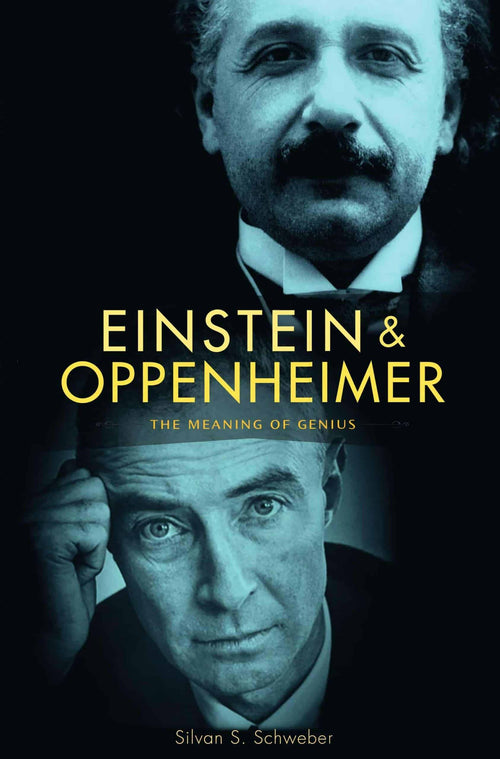
The Russell–Einstein Manifesto (1955), calling for disarmament, preceded his co-founding of the Pugwash Conferences and later the Campaign for Nuclear Disarmament. At age 89, he was jailed again—this time for protesting nuclear arms. He called it “a pleasant and instructive experience.”
Private Contradictions, Public Force
Russell’s personal life was famously tangled. He married four times, loved often, and never pretended that the realm of reason extended comfortably into that of relationships. He wrote candidly about sex, education, and human happiness, advocating permissiveness long before it was fashionable. He believed in reason, but not repression. In this, he was more Bloomsbury than Kantian.
His libertinism was not without its costs. His children had strained relationships with him; critics called him selfish. But even his harshest detractors rarely accused him of insincerity. He was, in the end, a man who sought coherence, not perfection.
What made Russell uniquely powerful was his ability to move between registers. He could formulate a logical proof and then demolish a political platitude. He could explain Gödel’s incompleteness theorems to a lay audience and then urge that same audience to reject war, superstition, and authoritarianism. He refused to believe that clarity and passion were incompatible. For him, they were allies.
The Limits of Clarity
Russell’s legacy in philosophy is enormous, but it is also contested. He launched the analytic tradition, but many of its contemporary practitioners find his metaphysics dated. His logical atomism has given way to more nuanced views of meaning and structure. His hope that philosophy could be as precise as science has proved both fruitful and flawed.
Yet to reduce Russell to a stage in the evolution of thought is to miss his enduring importance. He believed that philosophy mattered not because it solved problems, but because it asked the right ones. He sought a world in which beliefs were proportioned to evidence, where disagreement need not end in violence, and where no idea, not even God, was immune to scrutiny.
This commitment to clarity in a clouded world remains Russell’s greatest gift. At a time when public discourse is polluted by dogma dressed as data and conviction unmoored from knowledge, his example endures.
Why Russell Still Matters
In a world awash with certainty—ideological, religious, tribal—Russell’s commitment to doubt feels strangely radical. He was not a cynic. He believed in truth. But he also believed that truth requires vigilance, revision, and humility.
His insistence that reason must serve humanity, not subjugate it, places him among the rare figures who are both philosophers and humanists. He did not write to ascend the ivory tower. He wrote to let some air in.
As artificial intelligence, geopolitical instability, and cultural polarization remake the 21st century, Russell’s model—rigor without arrogance, activism without fanaticism—offers an antidote. He reminds us that clear thinking is not a luxury, but a civic duty.
Bertrand Russell died in 1970, having lived through two world wars, four marriages, and more intellectual revolutions than most universities can count. His epitaph might well be his own advice to posterity: “Love is wise, hatred is foolish.”
0 comments