

One morning in the summer of 1912, Franz Kafka sat down at his desk in Prague and wrote a story in a single unbroken session that lasted through the night and into the following dawn. He was twenty-nine years old, employed at an insurance company by day, and had been writing fiction for years with little to show for it that satisfied him. The story he produced that night was "The Judgment," and when he finished it as the sun came up, he wrote in his diary that only in this way could writing be done, only with such complete openness of body and soul. Two months later, he began "The Metamorphosis," in which a man wakes to find himself transformed into a giant insect, and dispatched it with the same controlled ferocity. He spent the rest of his life instructing his friend Max Brod to burn everything. Brod declined. The two stories Kafka wrote in that extraordinary burst of 1912, produced in secret, in the hours between midnight and dawn, while the city slept around him, would eventually give a new word to every major language on earth.
Imagine a world where the absurd and the profound collide, where bureaucratic nightmares and personal dilemmas intertwine in a dance of dark humor and existential reflection. This is the universe Franz Kafka (1883–1924) crafted, a realm where the ordinary becomes extraordinary, and the boundaries of reality blur into the surreal. His stories, rich with themes of alienation, conflict, and oppression, have given rise to the term Kafkaesque, encapsulating experiences that are simultaneously nightmarish and oddly humorous, a quality that feels, in the twenty-first century, less like metaphor than description.
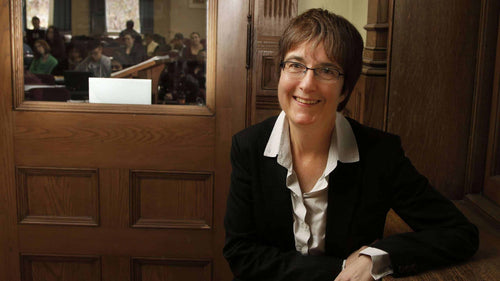
To explore Kafka's multifaceted world requires a guide with both scholarly depth and a genuine feel for the strangeness of the work. Ruth V. Gross, Professor of German and former head of the Department of Languages and Literatures at North Carolina State University, is precisely that. A two-time past president of The Kafka Society of America and author of The Franz Kafka Encyclopedia, Gross brings to her subject a perspective that is rigorously scholarly and genuinely accessible, showing how Kafka's work transcends literary analysis to reveal a world where humor and horror coexist, illuminating rather than merely disturbing.
In the conversation that follows, Gross reflects on Kafka's life, his revolutionary work, and the lessons it continues to offer anyone willing to follow it into the uncomfortable territory it maps. From the boldness of his insights to their lasting impact on modern thought, what emerges is a portrait of both the man who changed literature and the mind of a contemporary thinker who has spent her career exploring why, more than a century after those sleepless Prague nights, he continues to feel so urgently, so unsettlingly, present.
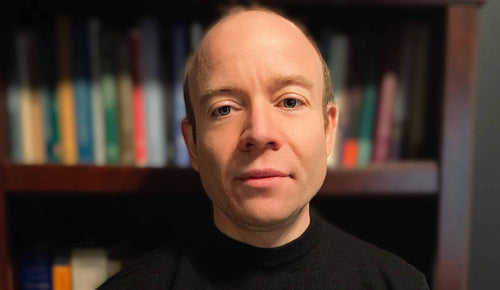
Charles Carlini: You’re the Department Head of the Foreign Languages and Literatures Department at North Carolina State University, the author of several books about Franz Kafka, editor of Kafka for the Twenty-First Century, and past president of The Kafka Society of America. What initially sparked your lifelong interest in Franz Kafka’s work?
Ruth Gross: In 1977, I participated in an NEH Summer Institute on “Style” at the University of Colorado in Boulder. One of the professors, (the late) Seymour Chatman, had us reading and discussing Roland Barthes’ SZ, and I took a one-page text of Kafka’s to see if the codes that Barthes laid out for Balzac’s rich text could also work for a skeletal text like Kafka’s “A Common Confusion.” That experiment laid the groundwork for an article I later published in PMLA, called “Rich Text/Poor Text: A Kafkan Confusion” (1980), and started me down the “Kafkan highway” that has been my road ever since. The world of Kafka scholars (or Kafka-Menschen) is welcoming to newcomers, and so it was with me. What I find so exciting is the open-endedness of Kafka’s texts that bear reading and re-reading and re-re-reading to always find something else that went unnoticed before, but that may lead to a new perspective. As a dear colleague of mine once so rightly said, when you work on Kafka, you understand that this author and his prose are so much better than anything that we can say or write about him. Reading him (again) is always a reward.
CC: Kafka was born to a Jewish family in Prague, yet, though fascinated by the Jews of Eastern Europe, he often alienated himself from Jewish culture in his writing. Kafka even went on to write: “What have I in common with Jews? I have hardly anything in common with myself and should stand very quietly in a corner, content that I can breathe.” Had Kafka lived to see the atrocities committed against the Jewish people during World War II and against his family, how would he have reacted?
RG: Well, we know that all three of his sisters perished in camps during World War II. How could he have reacted but in absolute horror? It didn’t matter what kind of Jew you were, i.e., how observant—in Hitler’s world, you became “Jewish” as a result of Nazi ideology. In the last year of Kafka’s life, 1924, he was contemplating emigrating to Palestine with his companion, Dora Diamant. His good friend and literary executor, Max Brod, an avid Zionist, went to Palestine in 1939 and lived there (in Israel) until his death in 1968. Although not a Zionist himself, Kafka might have followed Brod if he had still been alive. Still, this is total speculation.
CC: Kafka had several relationships with women and was even engaged three times, twice to the same woman, yet he never married. How do you think his relationships with women influenced his work?
RG: Kafka and Women is a topic I keep coming back to. I have written about it twice and alluded to it in some of my other work as well. Kafka’s published diaries and letters reveal a great deal about his relationships with Felice Bauer (his two-time fiancée), Julie Wohryzek (the woman he was engaged to after Felice), Milena Jesenská, and Dora Diamant, as well as his relationships with the women in his family—his mother and his three sisters. We know Kafka wanted to write more than he wanted anything else in his life—he knew it was expected he would lead a good bourgeois life and marry and have children. But Kafka believed he was literature, i.e., a writer who had to write and create. We know he ascribed primacy to writing over anything else in his life and subordinated all other aspects—certainly his professional career and the idea of a good, Jewish married life—to his unconditional devotion to literary creation. Anything that was not concerned with literary creation, he considered a distraction from the real essence of his being. In a letter to Felice, he wrote of his ideal existence, and missing from that description is any mention of human contact, love, and warmth—in short, a woman. Kafka’s favorite relationship was with his pen—he knew that marriage and family could only keep him from his writing, and that was an impossible situation for him. So, the question really should read: how did he prevent his relationships from affecting his work? And the answer is: by breaking them off.
CC: The opening lines of Kafka’s The Metamorphosis are some of the most famous in modern literature. What is it about these opening lines that is so strikingly different?
RG: Something that seems impossible is being treated as totally real. I always try to explain to my students that they have to imagine themselves back in 1915—as if the last 100 years hadn’t happened—the historical moment of 1915 was marked by modernist writers, but Kafka’s style and imagination were unprecedented. The shock of reading about a human as vermin, so graphically described, was astonishing and yet fully believable because of Kafka’s style. The thought of waking up in an alien and imprisoning body, yet perfectly capable of human thought, surpasses any possible horror that we might imagine. Kafka combines the hyper-realistic and the hyper-fantastic; that is, he treats the hyper-fantastic as cold reality. The metamorphosis has taken place–the character’s consciousness begins after he wakes up, so this is not a dream. That differs totally from what came before.
CC: When Kafka lay dying of tuberculosis, he directed his executors to burn all of his writings. Only his friend Max Brod disobeyed. How much work was lost?
RG: Max Brod was Kafka’s literary executor and the one responsible for saving most of Kafka’s written work. We are fortunate, indeed, that Brod thought he knew Kafka better than Kafka himself, for Brod instinctively understood that the work of this writer had to be preserved. Because of that, Kafka’s works are mostly extant in some form. Unfortunately, the letters written to him by Felice Bauer and Milena Jesenská are gone, so what we have are one-sided correspondences with these women that allow Kafka to be the creator of his story with them.
CC: Kafka did not become a famed writer until after his death. What would his response have been to the success achieved post-mortem?
RG: I ask myself the same question whenever I go to Prague and see Kafka’s face in all the souvenir shops and see his stamp all over the city with special walking tours and visits to his various abodes. Knowing how much he doubted his abilities, I think he would probably be incredulous, but that doesn’t mean that he wouldn’t relish the irony. It is interesting to me that Kafka really was discovered after World War II and, in large part, in translation in the late 1940s. Hannah Arendt and Clement Greenberg in New York, and Albert Camus in Paris, became strong advocates of Kafka’s work, and an intellectual community that, as Anatole Broyard peripherally described in his memoir, Kafka was the Rage, began reading and talking about his works. Kafka would probably have felt at home in Greenwich Village in the late 1940s. And then academia discovered Kafka, and the body of literature about him and his works continues to multiply exponentially each year. Another irony that might not be lost on Kafka himself is that his Gesamtwerk—everything he wrote—can easily be published in a few volumes and read, but the secondary literature is endless, and, as in his text “An Imperial Message,” in which a messenger can never reach his intended recipient with a message given to him by a dying emperor, “the crowd is so huge; its dwelling places are infinite.” Thus, at the end of the day, we readers can only “dream the message” that Kafka has intended for us.
CC: Throughout his lifetime, Kafka wrote mostly shorter texts, insurance office reports, and memos. His three novels are all incomplete. Why do you think he had difficulty writing longer texts?
RG: Some of Kafka’s best texts are one page or shorter. But he was sure he would not be taken seriously as a writer if he didn’t write novels, and so he produced longer texts—three, to be exact. The Man Who Disappeared (Amerika) was his first attempt, and the last chapter of this first novel is incomplete. For that reason, when he began writing his second novel, The Trial, he wrote the last chapter immediately after writing the first chapter. That way, he knew there would be an ending—he failed, however, to complete some of the chapters in between. In 1925, Max Brod edited the posthumous manuscript that would remain the definitive version for a long time. Without Brod, this visionary text might never have been published. Kafka’s last novel, The Castle, by far his longest work, also has no end. We have an idea how he might have ended it, but the fact is, it, too, remains unfinished. To my mind, Kafka thought in images and fragments. His brilliance lies in the graphic descriptions of these images and in the wordplay that they often trigger. This kind of imagination is hard to sustain over long and convoluted plots that novels most often require. That is not to say that his novels aren’t important and revelatory of the Kafkan mind, and his main characters display the modernist angst that has come to be identified with Kafka’s thought and are representative of the 20th-century human with all the appropriate neuroses and fears. We might simply say that the open and unfinished texts of these three novels enact the open-endedness of Kafka’s writing in general, which is the reason he remains always alive. Finished novels make for a finished understanding, and Kafka doesn’t provide that with his longer works.
CC: You, along with Richard T. Gray, Rolf J. Goebel, and Clayton Koelb, wrote A Franz Kafka Encyclopedia. What inspired you to take on this enormous project?
RG: Of everything I have written or published about Kafka, I believe this is my most lasting contribution. It really helps “students” of Kafka (and I define students here in the broadest sense of scholars and neophytes) get quick information that will help them position Kafka’s works and ideas for better understanding. When I look it over today, I can think of entries that should be there and aren’t, but, on the whole, it is a reference tool of benefit to many. Chasing down and researching a random list of entries assigned to me was an exciting, sometimes difficult, task. And a lot of fun. I learned so much about Kafka through this project.
CC: You are the two-time past president of The Kafka Society of America. What sort of activities does the Kafka Society engage in?
The Kafka Society was much more active years ago than it is now; in fact, whether because of the pandemic or other reasons, I don’t think it really has much of a life these days. However, during the last quarter of the 20th century and well into the 21st, its founder, Maria Luisa Caputo-Mayr, was one of the cornerstones of Kafka studies. Along with publishing what was first called “The Newsletter of the Kafka Society of America” and later became The Journal of the Kafka Society of America, the Society ensured that panels on Kafka were held at most scholarly conferences in this country and even internationally. It kept Kafka on the front burner of literary studies and was the authoritative voice of Kafka scholarship. An annual business meeting, always held at the Modern Language Association convention, would bring together all those Kafka-Menschen, young and old, in conversation and in exchanges of ideas. The community it fostered made Kafka studies a good place for young academics to enter scholarly discourse. I hope there are such communities today, because we live in a difficult age for young humanists.
CC: Which of Kafka’s works is your favorite and why?
RG: I love the shorter texts, and most particularly, “Poseidon.” One of the big revelations for readers who start dealing with Kafka is that he is actually hilarious. His humor may be dark and wry, but it is there, and in “Poseidon,” that humor is striking. In “Poseidon,” we have the absurdity of an all-powerful Greek god stuck in his administrative duties at the office and never getting the chance to get out to enjoy or even view his domain. He can’t really oversee because of his compulsion to oversee. It’s both absurd and, at the same time, very human, because in it, we recognize our own tendencies to put off the really important elements of life. I can’t imagine that Kafka didn’t laugh when he completed this text.
CC: What do you feel is Kafka’s lasting legacy?
RG: I don’t know of any other author who has captured the modern imagination as totally as Franz Kafka. It is not a coincidence that so many authors who have come after him consider him their inspiration. He foresaw the world of incomprehensible mechanisms, institutions, and laws administered by inscrutable and petty authorities that beg understanding and over which the average being has no control. And as horrifying and frustrating as that combination can be, it can still make us stand back, reflect, and laugh (perhaps with terror) at our human situation. It certainly seems that our world of Big Tech and Big Data is producing the demonic side of Kafka’s vision. The Kafkaesque is always with us. I will end with one of my favorite of Kafka’s aphorisms: “In the fight between you and the world, back the world.”
Recommended Reading


0 comments