

In 1766, Immanuel Kant published a short book mocking the Swedish mystic Emanuel Swedenborg, who claimed to communicate with spirits and angels. The book was sharp, witty, and unsparing in its ridicule of metaphysical speculation untethered from reason and evidence. Kant sent a copy to a friend with a note suggesting it was a minor amusement. What he did not mention, and what his letters reveal, was that he had spent considerable time reading Swedenborg carefully and had found himself genuinely unsettled by the experience, not converted, but shaken enough to wonder whether the tools he was using to dismiss such claims were themselves as secure as he had assumed. The book's mockery, it turns out, was partly a defense against his own uncertainty. That unease, that nagging suspicion that the foundations of knowledge needed to be examined far more rigorously than anyone had yet managed, would drive the next fifteen years of almost total intellectual silence, at the end of which Kant produced the Critique of Pure Reason and changed philosophy forever.
Immanuel Kant (1724–1804) was a German philosopher of the eighteenth century who left a lasting legacy in the world of philosophy. His sweeping contributions to ethics, epistemology, metaphysics, and aesthetics reshaped the intellectual landscape of the modern world, and his ideas continue to shape and influence philosophical thought today, cementing his place as one of the most consequential thinkers in history. The questions he asked about what we can know, how we ought to act, and what we may legitimately hope for remain as alive and as difficult as they were when he first posed them in Königsberg, a city he never left and from which he somehow managed to address the whole of human experience.
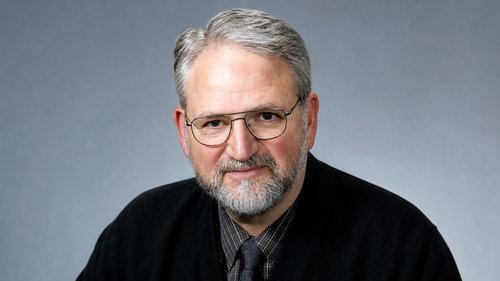
To navigate that legacy with both scholarly precision and genuine intellectual curiosity requires a guide who has absorbed Kant from multiple directions. Markus Kohl, Associate Professor of Philosophy at the University of North Carolina, Chapel Hill, brings precisely that breadth to his work. A well-traveled intellectual whose background in literature and philosophy took him from Germany to the United Kingdom and ultimately to the United States, Kohl earned his Ph.D. from the University of California, Berkeley in 2012 before joining the faculty at Chapel Hill in 2017. His research interests range across Kant, Nietzsche, and Kafka, a constellation of thinkers united by their shared preoccupation with the limits of reason, the demands of morality, and the strangeness of the human condition.
In the conversation that follows, Kohl brings that range to bear on Kant's enduring significance, illuminating a philosopher whose works continue to captivate not because they offer easy answers but because they refuse, with extraordinary rigour and honesty, to pretend that the hardest questions have been resolved.
Charles Carlini: What initially drew you to Kant's philosophy, and what continues to fascinate you about it?
Markus Kohl: Three things initially drew me to study Kant: his profound arguments, the systematic nature of his philosophy (that is, his ambition to tackle a wide range of fundamental theoretical, practical, and aesthetic problems, and to combine his solutions into one coherent position), and his examination of the limits of a naturalistic worldview. My ongoing interest in Kant is still largely driven by these factors, but I have also come to appreciate his insightful account of human cognition as a goal-directed, norm-governed process.
CC: In your opinion, what are some of the most important contributions Kant made to the field of philosophy?
MK: I find Kant's ideas on theoretical cognition as a norm-governed, spontaneous activity and human freedom as a property of rational creatures extremely intriguing. Additionally, his theory of transcendental idealism, which holds that the world we perceive is shaped by our cognitive abilities rather than existing independently of the mind, is a fascinating doctrine with unique advantages over realist and other idealist theories.
CC: Could you explain the concept of the "categorical imperative" and how it shapes Kant's moral theory?
MK: Kant's views on ethics center on the idea that all moral judgments and duties stem from a fundamental principle, known as the "moral law." He offers different formulations of this law, sparking debates among Kant scholars over its primary or most important form. One version states that it is always good, or rationally necessary, to act from motives that could be universally accepted by all rational beings or “fitting for universal legislation” (Critique of Practical Reason, 27). Another states that it is always good to treat rational beings, including oneself, with dignity as an end in itself and not merely as a means to an end.
Kant acknowledges that humans are only imperfectly rational and that recognizing what is good doesn't always lead to good actions. He, therefore, conceives the moral law as a duty, known as the categorical imperative, that guides and constrains human behavior. This imperative informs Kant's theory in two ways. First, it provides the foundational and general normative principle of reason that underlies all specific moral norms, making his philosophy a form of moral rationalism and anti-consequentialism. Second, it highlights humanity's moral limitations and imperfections, emphasizing the need for self-constraint, vigilance against self-deception, and the recognition that there may not always be a perfect match between good moral behavior and personal satisfaction.
CC: How does Kant's theory of aesthetics, as outlined in the Critique of Judgment, differ from those of other philosophers?
MK: Kant's aesthetic theory can be compared and contrasted with various other theories in several ways. One comparison can be drawn between Kant's approach and that of his predecessors, such as Lord Shaftesbury and Francis Hutcheson (representing the British 'internal sense' approach) and Moses Mendelssohn (representing the rationalist approach). According to the former approach, beauty can be sensed immediately, and aesthetic pleasure felt through an innate mental faculty without the need for intellectual representation. The latter approach argues that aesthetic experience involves the contribution of intellectual faculties, as beauty must live up to a standard of perfection that can only be judged by reason. Kant's view lies in between these two approaches, as he believes that aesthetic experience involves direct perceptual contact with objects, but also involves a play between the faculties of imagination and understanding.
Kant's theory also aligns with that of later empiricists like David Hume and Edmund Burke in its aim to legitimize the claim that aesthetic judgments are not arbitrary personal whims but have universal validity. Unlike empiricists, however, Kant believes that the universal validity of aesthetic responses relies on a priori resources independent of our natural psychology.
Kant's concept of disinterested pleasure in aesthetic apprehension is also noteworthy, as it bears some resemblance to Arthur Schopenhauer's view, but differs in its root. Friedrich Nietzsche argues that any theory of aesthetics that sees it as dispassionate or disinterested stems from a nihilistic estimation of life, while a healthy aesthetics celebrates how beautiful things elevate and sublimate our passions.
Kant's theory has other interesting aspects, such as its connection between aesthetics and morality and its account of aesthetic production, that invite comparison to other views.
CC: How does Kant's concept of the "noumenal" realm challenge traditional metaphysical beliefs?
MK: Traditional metaphysics seeks to understand the true nature of reality independent of our limited cognitive abilities and to prove the existence of objects beyond our sense experience, such as God, freedom, and the soul. Kant's idea of the noumenal world encompasses these concepts, but he holds that this world is entirely independent of our cognitive abilities and therefore we cannot gain any determinate knowledge of it. Instead, we can only know things as they appear to our senses and are limited by our cognitive capacities. As a result, the goals of traditional metaphysics cannot be achieved, according to Kant.
CC: Could you discuss Kant's views on freedom and determinism, and how they compare to those of other philosophers?
MK: Kant rejects the idea of compatibilism, which holds that an action can be considered free even if it is solely caused by predetermined factors. He believes that for an action to be considered free, it must be spontaneous and not determined by prior causes. This means that he denies the existence of free will within the empirical world, where all actions are determined by prior causes.
However, Kant is an idealist who believes in a mind-independent reality beyond our senses, which he calls the noumenal world. He asserts that human beings possess free will as a result of their non-sensible constitution, different from their sensible, causally determined constitution.
Although it cannot be proven theoretically, Kant suggests that belief in free will can be justified through practical reasoning. Our adherence to valid moral norms implies the existence of free will, as these norms could not be followed without the ability to freely comply with them.
CC: How does Kant's theory of knowledge, as outlined in the Critique of Pure Reason, differ from empiricist approaches?
MK: It's important to note that Kant's views on theoretical 'cognition' (Erkenntnis) and 'knowledge' (Wissen) are distinct. Kant's Critique of Pure Reason focuses on theoretical cognition as a mental state that involves a definite representation of objects. This type of cognition requires that objects must be perceived by our senses and that we intellectually understand their properties compared to other objects. There is an empirical aspect to this doctrine, as we can only cognize things if they and their properties are a part of our sensory experience. However, the theoretical cognition that results from sensory experience must also have an intellectual, conceptual structure, and some of the concepts that enable this structure must be a priori, coming from our intellectual abilities rather than our senses. These concepts, such as 'substance' and 'causality,' are called categories, and they make sense-experience and theoretical cognition possible in the first place. Thus, they can't be derived from sense-experience, and Kant denies pure empiricism as taught by John Locke or Hume.
Knowledge, according to Kant, is a doxastic mental state where the thinking subject recognizes a proposition as true based on reasons that render the proposition objectively certain and require an a priori foundation. It's unclear to what extent Kant differs from empiricists such as Locke or Hume, as they may agree with Kant's characterization of knowledge but differ in their views of what can be known with a priori certainty. For Kant, the domain of certain knowledge requires a priori components and includes elements that empiricists typically do not consider knowledge, such as knowing with certainty that every event must have a cause. However, Kant agrees with empiricists that we can't obtain knowledge of objects without sensory experience, and thus can't know things like God, free will, or immortal souls, which are inaccessible to our senses.
CC: How do Kant's political and ethical philosophies intersect, and how do they inform his vision of a just society?
MK: Kant's political philosophy is rooted in his moral principle, the categorical imperative, which is central to his ethics. He believes that political thinking should not be driven by the pursuit of benefits, but by the application of ethical rules to specific political circumstances. According to Kant, a just society should be a "kingdom of ends," where every person is treated as an end in themselves and not merely as a means to an end. This requires people to act based on principles that are acceptable to all rational persons and to adopt a universal point of view that values everyone equally.
Kant's focus in political philosophy is on the structure of society and how it can protect the dignity of its members. He argues that the state must ensure that every member can exercise their freedom of choice without hindrance or constraint by others. This requires the presence of a state or sovereign power that can prevent individuals from hindering the freedom of others.
In his political philosophy, Kant emphasizes the role of autonomy, which is the capacity of rational agents to give laws to themselves. He believes that full citizens of the state should be seen as co-legislators, though this does not mean they make political decisions themselves. Rather, he believes that political decisions should be made by lawmakers, whether elected or unelected, who represent the united will of all citizens. A just state, according to Kant, should be a republic, with a separate legislative and executive branch.
Other aspects of Kant's political philosophy include his emphasis on cosmopolitan rights and perpetual peace, his denial of the right to rebellion, and his qualified endorsement of civil obedience. Unfortunately, he also held parochial views on women, seeing them as passive members of the state who lacked full citizenship.
CC: In your view, how has Kant's philosophy been received and interpreted by philosophers in the centuries following his death?
MK: Kant's philosophy has been widely interpreted and received differently, influenced by the interpreters' historical and socio-cultural background. In his theoretical philosophy, the key aspect that has caused controversy is his belief that we can only understand reality as it appears to us, not as it truly is, due to the influence of our mind on the things in themselves. In the early 19th century, some "absolute" idealists sought to remove Kant's belief in unknown things in themselves and give more power to the self-awareness of the cognizing subject. Later philosophers rejected the idea of grounding the world in self-consciousness and either showed that Kant's appeal to things in themselves was just an emphasis on the limits of human knowledge or considered it an error that could be dismissed. In recent years, there has been a revival of interest in Kant as a metaphysician.
Kant's moral philosophy has also received both favorable and unfavorable reactions. Some have separated it from his metaphysical views on free will, while others have emphasized their close ties. The fundamental moral law to respect human dignity and treat others as ends in themselves has been praised but also criticized for its abstractness and lack of practical guidance.
Kant's focus on reason and rationality in his philosophy has also been rejected by some, who are skeptical of the idea that humans can exercise universal rationality, independent of socio-political factors. Others, like Nietzsche, have gone further to reject the ideal of unbiased and universal rationality.
CC: What aspects of Kant's philosophy do you find the most compelling or relevant to contemporary philosophical debates?
MK: This question is challenging, as it implies that the relevance of Kant's ideas is measured by contemporary philosophical debates. However, I personally don't believe that the significance of past philosophers and their ideas should be evaluated based on current debates. Nonetheless, focusing specifically on Kant, I think his perspectives on free will and moral agency are significant for contemporary debates in the philosophy of action and moral theory, and that his views on intellectual autonomy, the unity of self-consciousness, and cognitive agency can be relevant to certain strands of current epistemology and philosophy of mind.
Recommended Reading


0 comments