

In the summer of 1925, a group of American and British expatriates traveled from Paris to Pamplona for the Festival of San Fermín. They drank heavily, watched bullfights, and fell into the jealousies and recriminations that travel tends to accelerate. Ernest Hemingway was among them, twenty-five years old and not yet famous, and he watched everything with the quiet, almost predatory attention that those who knew him found simultaneously flattering and unsettling. He returned to Paris and wrote the experience up in six weeks. The novel he produced, The Sun Also Rises, was published the following year and made him famous overnight. What struck readers then, and still strikes them now, was not the story but the voice: stripped of sentiment, stripped of explanation, stripped of everything that prose had traditionally used to guide a reader toward feeling. Hemingway trusted the feeling to arrive on its own if the facts were right. It was a gamble that changed what the novel could do.
Ernest Hemingway (1899–1961), the legendary writer who claimed both the Pulitzer and Nobel prizes, did not simply pen stories. He reshaped the very architecture of modern literature. With a style as lean and unflinching as the man himself, Hemingway stripped prose to its bones and gave the twentieth century a new voice: spare, direct, and undeniably powerful. His influence spread so thoroughly through the literature that followed that writers who have never read him have been shaped by him at second and third hand, absorbed through the writers who absorbed him first.
Yet the man behind the myth remains as fascinating and as contested as his fiction. The celebrated masculinity, the big-game hunting, the wars, the marriages, the drinking: these have a way of overwhelming the quieter story of a writer of extraordinary discipline and technical seriousness, whose apparent simplicity concealed a craft of formidable complexity.
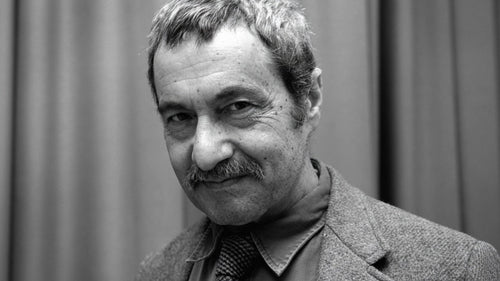
Few know that world better than Allen Josephs, Research Professor at the University of West Florida. A globally respected Hemingway scholar and former president of the Ernest Hemingway Foundation and Society, Josephs has spent decades immersed in the myth, the man, and the enduring legacy of one of literature's most iconic and most misunderstood figures. In the conversation that follows, he guides us past the legend and into the work, asking what remains when the mythology is set aside, and the sentences are allowed to speak for themselves.
Charles Carlini: You’ve had an abiding interest in Spanish culture for more than 40 years, particularly in bullfighting. You have recently published Beyond Death in the Afternoon: A Meditation on Tragedy in the Corrida, and a collection of your previous writings entitled On Hemingway and Spain: Essays and Reviews, 1979-2013. How did this fascination with all things Toreo begin?
Allen Josephs: Actually, my interest in Spanish culture and the bulls dates from 1962, so that’s beyond the half-century mark now. I was lucky enough to find my way to Spain just before I turned 20. I felt instantly and irrevocably as though I had come home to a place where I had never been. I learned Spanish very quickly and loved the language and the people who so selflessly taught it to me. Unlike some cultures, the Spaniards want you to speak their language. Then I saw my first “bullfight,” and loved it at once. Seems like yesterday.
CC: In a piece you wrote for The Cambridge Companion to Ernest Hemingway, you stated that among the many places that Hemingway wrote about, none captured his imagination as much as Spain did. That’s a bold statement to make, considering that places like France, Italy, Key West, and Havana have also figured quite prominently in his writings. What is your argument for this position?
AJ: Just look at what he wrote about Spain: many short stories, much of his journalism, his three finest novels (The Sun Also Rises, For Whom the Bell Tolls, and The Old Man and the Sea), plus two books of non-fiction (Death in the Afternoon and The Dangerous Summer). Spain was also the place of his only political involvement—the Spanish Civil War of 1936. Nothing else comes close, especially if you lump Cuba in there, and I think you must. Cuba was the most Spanish of the Spanish colonies. Remember, too, that the character of The Old Man and the Sea, Santiago, is from the Canaries, the Islands, which belong to Spain. He is Spanish, African, and Cuban. And, of course, the bulls really grabbed Hemingway’s attention.
CC: Your work on Ernest Hemingway and bullfighting is particularly noteworthy. Hemingway, of course, was enthralled by bullfighting after seeing the Pamplona fiesta in the 1920s, which he wrote about in The Sun Also Rises. So in your essay, Toreo: The Moral Axis of The Sun Also Rises, you explore the art of toreo and its relationship to The Sun Also Rises. What were you trying to express in this essay?
AJ: That toreo was the moral or ethical center of the novel, and actually of a certain form of life. Everything in the novel revolves around the fiesta, and at the center of the fiesta is toreo. It’s really quite simple if the reader can dispense with built-in cultural prejudice—the Anglo chauvinism is a real problem, and one that concerned Hemingway greatly. It was because of that cultural blindness on the part of his compatriots that he wrote Death in the Afternoon. He wanted to explain to us something we did not understand. This cultural prejudice runs so deep that many reviews of Death in the Afternoon were negative because reviewers could not see beyond their own beliefs to understand what Hemingway meant. The one Spanish reviewer of the book, himself a bullfighting critic, understood it at once and called the book a Gospel, akin to bringing the “Good News” of toreo to the gringos. This issue is highly complex, and readers should not judge without knowledge and preparation. Suffice it to say that Hemingway makes toreo the moral or ethical center of his work for very substantial spiritual reasons.
CC: Much has been made of the notion of masculinity in Hemingway’s novels. It’s a common theme. How important is the concept of masculinity to the understanding of Hemingway’s work?
AJ: Not important at all, in my opinion. Hemingway is interested, above all, in spiritual issues, and much of what gets called “masculinity” is merely a genderized misunderstanding of them. Fishing, toreo, war, hunting, eating, drinking, and writing are spiritual matters relating to the sacred. To lump them under the “masculinity” label is like saying The Song of Songs or the poetry of San Juan de la Cruz is really just about sex. Such misconceptions reflect more on the critics than on Hemingway’s writing.
CC: For many bullfighting aficionados, the bible on the subject is Hemingway’s 1932 non-fiction book Death in the Afternoon. In a piece you wrote for The North Dakota Quarterly entitled “Beyond Death in the Afternoon: A Meditation on Tragedy in the Corrida,” you attempted to dig “deeper than Hemingway’s writings on the corrida.” How so?
AJ: The “bullfight” is not a “bull fight.” If it were, the bull would naturally win. It’s a sacrifice, and it recapitulates the earliest myths and rituals we have—such as The Epic of Gilgamesh or the story of Theseus and the Minotaur. In those myths, the hero dominates nature: the man-god defeats, by virtue of his wits and skill (what we call “art” today), the bull-god. It’s an ancient story at the core of human existence, dating back at least 50,000 years. It carries a great responsibility, which, along with its price, is what I was looking at. This issue is enormously complex, and it’s taken me all my life to arrive at the questions, much less the answers. It’s too deep to slough off with a quip, so I suggest that interested readers—it is, after all, one of the deepest philosophical questions of all—get the new printed version just out by New Street, my publisher. It’s available at a very reasonable price on Amazon under the same title and my name.
CC: In 1959, LIFE Magazine commissioned Hemingway to cover a duel between matadors Antonio Ordonez and his brother-in-law, Luis Miguel Dominguin. The article (posthumously released as a book entitled The Dangerous Summer) was produced during a time when Hemingway was suffering from many physical ailments, as well as from a deep depression. How were the articles received when serialized in the magazine? And how does this work stack up against his previous writings, especially on bullfighting?
AJ: It doesn’t stack up well at all. I wrote an article on the subject. It’s difficult to find, but it will be available very soon in On Hemingway and Spain: Collected Essays and Reviews, 1979-2013, also from New Street. The piece—whatever genre it was—was not well received in Spain, as it made some rather silly comments about a famous bullfighter, Manolete, and failed to give proper focus to the rivalry between the matadors in question. It was his last literary undertaking, and I consider it his weakest. But of course, he was in very bad health, both physically and mentally, so any judgment has to be tempered.
CC: After he died in 1961, Hemingway’s star began to wane, particularly during the 1970s. To what do you attribute this? And how relevant is Hemingway today?
AJ: The feminists of the first wave used him as a punching bag, as did the anti-war crowd. Later feminists, such as Linda Patterson Miller and others, redeemed his work by taking the time and effort to study what he had written, rather than jumping to dubious conclusions (one university reportedly threw a party to celebrate washing Hemingway out of the Freshman Lit class). After the formation of The Hemingway Society in 1980, things began to change—the Hemingway biography industry took off and shows little sign of abating, although much of what has been written as biography must be read with a grain of salt.
CC: Hemingway’s third wife, American journalist and novelist Martha Gellhorn, described Ernest as “a genius ... not so much in what he wrote ... as in how he wrote; he liberated our written language. All writers, after him, owe Hemingway a debt for their freedom, whether the debt is acknowledged or not.” Can you elaborate on how Hemingway liberated our language?
AJ: That quote by a non-sympathetic ex-third-wife and excellent writer in her own right is one of the truest judgments ever made about the importance of Hemingway’s work. He’s been the most important stylist in English since Shakespeare, and the so-called “Hemingway factor” cannot be subtracted from our language. What did he free us from? In a word, 19th-century rhetoric. I go into this topic at some length in On Hemingway and Spain, in an article called “How Did Hemingway Write?” Naturally, I quote Miss Martha, of whom I was quite fond. And also Ezra Pound, who called him very early on the finest prose stylist in the world. How could he not be—after all, Pound was his teacher.
CC: In 2010, the Catalan parliament voted to ban bullfighting, which finally took effect in January 2012. It was a big blow to many Spaniards who see the age-old ritual of toreo as a key part of their nation’s cultural heritage. Do you think this ban will spur other regions to follow suit? And what future lies ahead for toreo?
AJ: The Catalans banned the corrida purely for political reasons - because it is Spanish. It makes you understand why Hemingway despised politics and politicians. Yes, others will follow suit and already have in Latin America, but for the wrong political reasons; the move had nothing to do with animal treatment. Hemingway, William Faulkner, and Cormac McCarthy (influenced deeply by them both) wrote against the modern world, and their message is not to be taken lightly. Rejection of the bulls is representative of what is wrong with modernity. To ban them is to embrace political intransigence and to fail to understand one of our deepest and oldest belief systems. As toreo goes, so goes the world.
CC: For those coming to Hemingway for the first time, where would you suggest they begin?
AJ: The short stories, without a doubt. That’s where Hemingway’s stylistic revolution takes place, especially in the vignettes of In Our Time and several of the Nick Adams stories, such as “Big Two-Hearted River.”
Recommended Reading


0 comments