

In the winter of 1220, the citizens of Samarkand opened their gates to Genghis Khan. It was, they had calculated, their best chance of survival. The city was one of the jewels of the Islamic world, a center of scholarship, trade, and architecture that had flourished for centuries at the crossroads of the Silk Road. Its garrison numbered in the hundreds of thousands. None of it mattered. The cities that had resisted, Otrar, Bukhara, Urgench, had been reduced to rubble and their populations to ash. Samarkand surrendered and was spared, mostly, though its defenders were hunted down regardless, and a portion of its population was conscripted into the Mongol war machine and marched toward the next city on the list. What the Mongols left behind them as they moved west was not simply destruction but a kind of recalibration of what was possible, a demonstration that no wall was high enough, no army large enough, no city remote enough to be beyond their reach. The world had encountered nothing quite like it, and it would be centuries before it recovered.
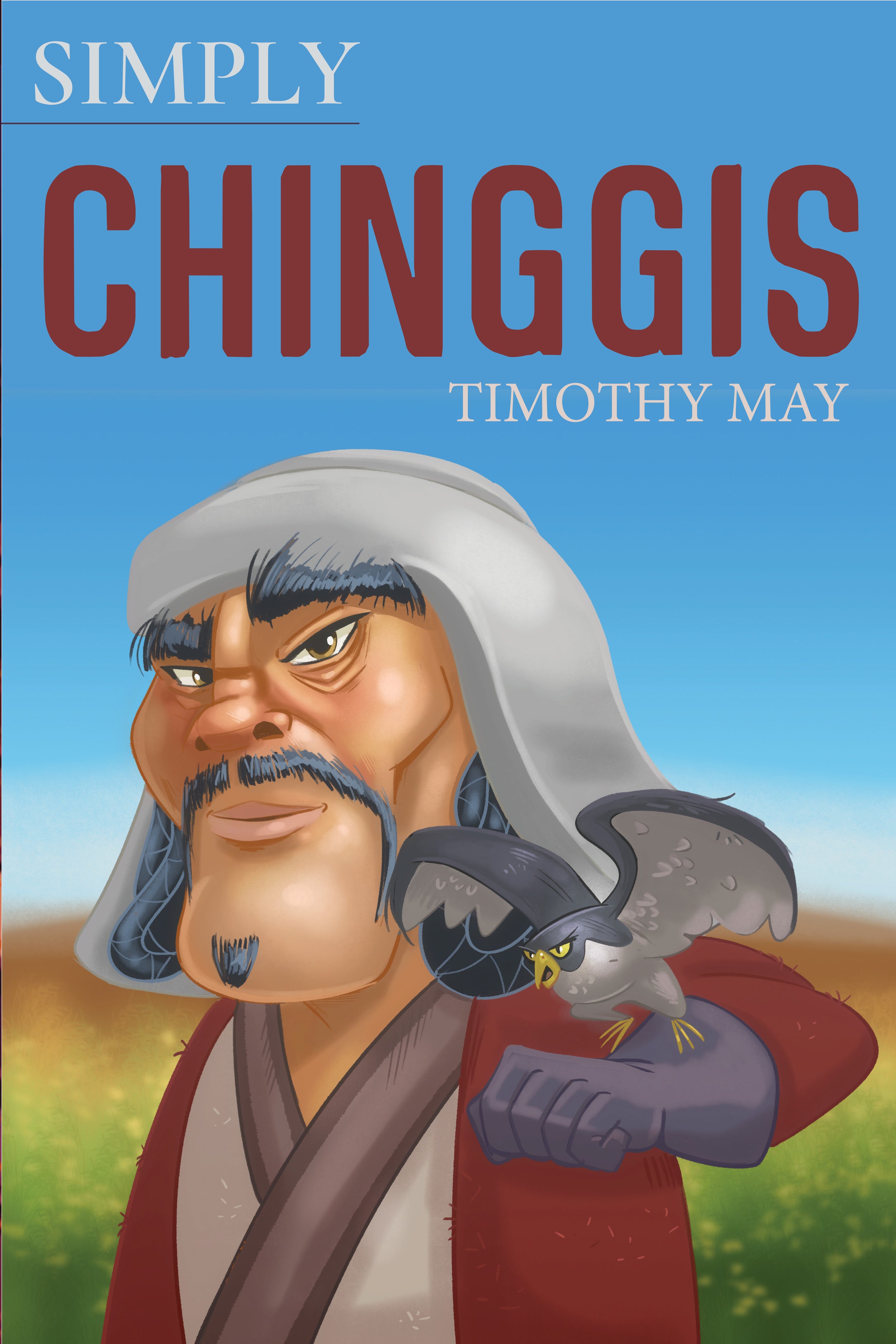
Founder of the Mongol Empire and one of the most feared conquerors in history, Genghis Khan (1162–1227) built the largest contiguous land empire the world has ever seen, forged from the individual tribes of Northeast Asia through a combination of military genius, political cunning, and a ferocity that his enemies struggled to comprehend and his admirers have struggled to contextualize. The scale of the destruction he unleashed was without precedent, and the scale of the administrative and cultural transformation that followed it was nearly as remarkable. The Mongol Empire that he founded and his successors expanded connected Asia and Europe in ways that accelerated the exchange of goods, ideas, and diseases across the known world, reshaping civilizations that never saw a Mongol soldier and never knew they were living in the aftermath of his campaigns.
Few scholars have mapped that aftermath, and the conquests that created it, with more clarity or more breadth than Timothy May, Associate Dean of the College of Arts and Letters at the University of North Georgia. A specialist in the Mongol Empire and nomadic empires more broadly, May is the author of several books, including The Mongol Conquests in World History and The Mongol Art of War, works that bring to one of history's most dramatic subjects both rigorous scholarship and a genuine effort to understand the Mongols on their own terms rather than solely through the eyes of those they overwhelmed.
In the conversation that follows, May guides us into Genghis Khan's world, illuminating the military innovations, the political structures, and the human costs of an empire built at extraordinary speed and at extraordinary price, and asking what it means to reckon honestly with a figure whose name has become synonymous with both conquest and consequence.
Charles Carlini: You’ve made a career out of exploring the Mongol Empire and nomadic empires in general. What sparked your interest?
Timothy May: When I was in 5th grade, I stumbled upon Harold Lamb’s Genghis Khan and the Mongol Horde (1954). It captured my imagination. I had read other books by him, and his writing always excited my curiosity as a child. My awareness and interest in the Mongols persisted until I went to college. As a history major, I didn’t really have a focus, but then I read another book, James Chambers’ The Devil’s Horsemen: The Mongol Invasion of Europe, and everything sort of “clicked” in my mind. Although neither book will ever be considered a work of brilliant scholarship, both were well written and excited one’s interest in history.
CC: In your book, The Mongol Conquests in World History, you bring a considerable amount of erudition to your analysis of the rise of the Mongol Empire. What separates your book from others who have tackled this story before?
TM: I think what makes The Mongol Conquests in World History different from others is that its primary purpose is to examine the results of the Mongols conquests. Most books on the Mongols conclude with a chapter on the legacy of the Mongol Empire. This one made the legacy the focus. What was the legacy of the Mongols and their impact on world history? How was the world different after the Mongols? These were the questions that guided my work.
CC: When researching your book, what sources did you rely on most?
TM: In terms of primary sources, or those written from the period in question, I relied heavily on the Travels of Marco Polo, those of John de Plano Carpini and William of Rubruck (two Franciscan monks), as well as the writings from the Islamic world, such as Rashid al-Din and Juvaini (both of whom worked for the Mongols), as well as Ibn Battuta. There were many others, but these tend to stand out the most in my mind.
CC: The founder of the Mongol Empire and the person with whom most are acquainted is Chinggis Khan (also known as Genghis Khan in the West). The boy who would grow to become one of the most ruthless despots of all time faced great adversity during his childhood. Can you give us a sense of these hardships?
TM: Calling him a despot is misleading and ahistorical. With any historical figure, we must evaluate them in the context of their era and not our own. Considering that he promoted religious tolerance or at least indifference, as well as brought stability and security to trade routes, he was much more complicated than being a “despot.” Additionally, he valued merit and ability over lineage. Regardless, his career was greatly shaped by adversity. When he was but nine years old, his father, Yesügei, was poisoned. Immediately afterward, his family was abandoned by the rest of his father’s following. Thus, Temüjin, as Chinggis Khan (a title) was known in his youth, was left with his mother, four younger brothers, a sister, his two step-brothers, and his father’s second wife. They possibly had a couple of others with them, but no one of significance. He murdered his elder step-brother over food (and possibly power). He was enslaved by rivals, but escaped. His family’s horses were stolen, which for nomads was essentially a death sentence. When he finally married, his young wife, Börte, was carried off by the Merkits, who were seeking vengeance for when Yesügei kidnapped Hö’elün from her Merkit husband (they were newlyweds). When he recovered her several months later, she was very pregnant. Doubts about the parentage continue. Temüjin, however, learned from all of these events, and the lessons imparted shaped how he ruled.
CC: When judged by the sheer number of people defeated or by the total area of land invaded and occupied, Chinggis Khan conquered more than twice as much as any other man in history. Can you give us a sense of this unprecedented land-grabbing feat?
TM: After Chinggis Khan had unified the steppes of Mongolia, there was no indication that he sought to conquer the territory he did. His first forays outside Mongolia were to pursue tribes that had fled from him and could pose a threat to his power. His forays into the Jin Empire (northern China) were primarily pre-emptive strikes. The Jin had a long history of meddling in tribal affairs in Mongolia. Chinggis Khan was well aware of this, as he had served the Jin in this capacity. Primarily, his actions appear to have been intended to secure Mongolia and keep his army busy. It is important to remember that there had been constant warfare in Mongolia for most of his life. Many of those he now ruled and served in his army had been enemies. To keep them from fighting amongst themselves, he needed them to remain busy. What was surprising, though is that after a certain point, others came to him to submit. Before long, his empire had expanded to include portions of the Jin Empire and Kara Khitai to the west, simply because former subjects of those empires believed he was a more capable ruler than the ones they had. Mongol expansion into Central Asia was due to a trade dispute. As the Mongols were engaged in a protracted war with the Jin Empire, Chinggis Khan had no interest in a second war. Muhammad Khwarazmshah II, the ruler of the Khwarazmian Empire (Uzbekistan, Tajikistan, Afghanistan, Turkmenistan, and most of Iran), however, massacred the caravan and then killed one of Chinggis Khan’s envoys. War began. The Mongols destroyed their empire to such a level that most people have never heard of it.
CC: In virtually every major battle that Chinggis fought, his opponents greatly outnumbered him. What tactics and military innovations did Chinggis apply to overcome these lopsided odds and eventually vanquish his opponents?
TM: Chinggis Khan built on traditional steppe tactics that had been effective for centuries. These included tactics such as feigned retreats and the Parthian shot, in which a horse archer shoots backward. His toughest battles had been against other steppe nomads. To defeat them, Chinggis Khan instituted reforms that required strict discipline. This included not plundering until the battle was won. Plundering mid-battle was a tremendous obstacle, as medieval armies rarely received regular pay. Instead, they earned most of their income from plundering. Under his leadership, the loot was gathered after the battle, and then everyone received a share. Additionally, Chinggis Khan instituted new military formations that gave the Mongols greater flexibility in their fighting. I’ve written extensively about this in The Mongol Art of War (2007) and in several articles. Finally, Chinggis Khan had a great eye for talent, and he trained his commanders so that there was a consistent level of command in the Mongol armies. A commander of a unit of one hundred was trained to then take command of a unit of a thousand at a moment’s notice. Additionally, he focused on mobility and forcing the enemy to fight the Mongols on their terms rather than the reverse. Nomads were incorporated into the Mongol military, but non-nomads were allowed to remain in their own units and fight in their own fashion. The Mongols did not try to fit square pegs into round holes. Finally, the Mongols also learned how to use innovations like siege equipment and quickly applied it to their method of war. As their empire enabled them to tap into a range of technologies in the Middle East and East Asia, they became more creative in their approach to war.
CC: For centuries, historians have been trying to explain the improbable rise and success of Chinggis by advancing various political and socio-economic theories. But one theory propounded over the centuries, and one to which both historians and archaeologists have lately given more credence than any other, is climatic determinism. Can you tell us what this theory claims?
TM: Climatic determinism has swung its pendulum back and forth. For much of the twentieth century, some argued that the desiccation of the steppes drove the nomads out of Mongolia, thereby giving rise to the Mongol Empire. The problem is that Mongolia remained the Mongols’ capital until the reign of Khubilai Khan, and throughout its history, it served as a reservoir of horses and livestock. Additionally, the Mongols brought hundreds of captives to live in Mongolia. If there were a water shortage, this would not have been a good idea. While the Karakorum, the capital of the Mongol empire, was not large, it still housed thousands of people, and the Mongol court nomadized around it with thousands of animals. Now, the pendulum has shifted in the other direction. Based on tree-ring evidence, it appears that Mongolia at the time of Chinggis Khan’s rise was wetter, meaning that there was ample pasture, and this perhaps assisted in the rise of the Mongols. One thing that this does not address is why Chinggis Khan succeeded rather than any of his rivals on the steppe. Ultimately, as a historian, one cannot accept mono-causal explanations. Climatic factors must be considered, but rarely are they the only factor shaping an event.
CC: After Chinggis’s death in 1227, how much longer did his empire last?
TM: As a unified entity, it lasted until 1260, when a civil war broke out between Khubilai and his brother Ariq Böke as to who would rule after the fourth Mongol Khan, Möngke (r. 1250-1259). With its dissolution, it split into five entities: the Yuan Empire in East Asia and the Ilkhanate in the Middle East, which would recognize Khubilai Khan’s claim to rule the empire. Central Asia was divided into the Ogodeid Khanate (Ulus) ruled by Qaidu, and then into the Chaghatayid Khanate. Qaidu asserted his authority over the Chaghatayids. By 1307, the Ogodeyid Ulus was absorbed by the Yuan Empire, the Chaghatayid Khanate, and the Jochid Ulus (also called the Golden Horde). There was a period in the first decade of the 1300s when the Mongol rulers all agreed that the Khan of the Yuan Empire ruled over the entire Mongol World. One by one, these Mongol states disappeared. The Il-khanate ended in 1335 due to a lack of suitable heirs. The Yuan Empire lasted until roughly 1388, after China was lost in 1368. Civil war fractured the remaining Yuan territories. The Chaghatayids also continued into the 1400s, but by 1370, their territory had substantially diminished due to the rise of Tamerlane. The Jochid territories lasted the longest, though in the fifteenth century they began to fracture into small states. The last Jochid territory, the Crimean Khanate, was finally conquered by the Russian Empire in 1789.
CC: In an extraordinary article published in 2003 in the American Journal of Human Genetics titled The Genetic Legacy of the Mongols, a group of geneticists found that today 1 in 200 males are direct descendants of Chinggis Khan. Can you give us a little more detail about this astonishing recent discovery?
TM: During this study, there was the astonishing finding that a large segment of the population in Eurasia had similar genetic markers in the Y chromosome of their DNA. When it was mapped out, those with the same markers corresponded with the boundaries of the Mongol Empire. Furthermore, it was determined that this Y chromosome was from a single individual. Tracing it back in time, it corresponded with the era of Chinggis Khan. As his sons and then grandsons expanded into these territories, and they all had multiple wives and concubines, it made sense that this Y chromosome came from Chinggis Khan. Thus, the empire was not only established through geographical borders, but also genetically.
CC: Despite his humble beginnings and genocidal tendencies, Chinggis’s empire incorporated such modern features as religious freedom, written language, meritocracy, and legal code. What do you feel is Chinggis’s lasting legacy?
TM: I’m not quite sure what you mean by genocidal tendencies, as the Mongols never committed genocide. Certainly, one should never underplay the massacres (and there were many), but genocide is a loaded word and should be best left for true incidents of genocide and attempted genocide.
As for the legacy of the Mongols, the most obvious aspect of this would be Mongolia. The Mongols were just one group dwelling in what is today Mongolia prior to Chinggis Khan. Without him, there is a very good chance that there wouldn’t be a Mongolia. Additionally, one can give him much of the credit for how modern the world came to be. The details of which can be found in my book The Mongol Conquests in World History.
Recommended Reading

0 comments