

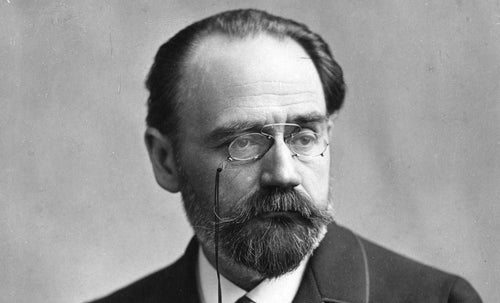
On October 7, 1885, Niels Bohr was born in Copenhagen, and the world of physics never quite recovered. If you’ve ever wondered who made atoms cool (and we mean really cool), look no further. Niels Bohr is the guy who gave us the Bohr model of the atom, and trust us, he made subatomic particles sound a lot more fun than you’d think. So, let’s raise a glass to the man who made quantum mechanics sound almost like a party – but with more electrons and less confetti.
The Man Who Gave Atoms a Personality (Literally)
Before Niels Bohr came along, atoms were basically just tiny, boring blobs of protons, neutrons, and electrons, floating around aimlessly in the ether. They weren’t doing anything interesting, and frankly, they were letting down the whole “science” community.
Then came Niels Bohr with his shiny new Bohr Model, and suddenly atoms were throwing parties! Electrons were like, "Oh, I don’t just float around randomly? I’m orbiting around a nucleus like a planet around the sun?" Yes, Niels, you made atoms cool again. Bohr’s model explained how electrons could have discrete energy levels – which basically made them the quantum rockstars of the scientific world. Not only did they orbit, but they jumped between levels like a DJ spinning tracks at a cosmic rave.
Let’s face it, without Niels Bohr, the atom would still be that nerdy kid sitting in the corner of the periodic table. Instead, Bohr made it the star of the science party.
Quantum Mechanics? More Like Quantum Bohring!
Bohr wasn’t just about making atoms look better – he dove deep into the wild, unpredictable world of quantum mechanics. If you’ve ever tried to wrap your head around the concept of uncertainty in quantum physics (don’t worry, we’re all still trying), you can thank Bohr for being one of the key figures who laid the groundwork. He’s the reason why we still joke about particles being in multiple places at once. If anyone could explain why electrons seem to be everywhere and nowhere at the same time, it was Bohr – who famously worked with Heisenberg (another physicist who made uncertainty sound like a very trendy concept).
He wasn’t just throwing around quantum jargon like a hipster at a coffee shop. No, Niels Bohr helped shape the very foundation of quantum theory with his ideas about complementarity, which, simply put, means that sometimes particles behave like waves, and sometimes they behave like particles. Bohr was like, “Sure, why not?” and went on to basically rewrite the rules of how the universe works. Quantum mechanics? More like Bohr’s playground.
Bohr’s Party Trick: Nobel Prize in Physics...And a Whole Lotta Influence
You might think Bohr had his hands full with atoms and quantum mechanics, but no – he had time to party with the likes of Albert Einstein, Werner Heisenberg, and the gang. These guys would sit around, debate the nature of reality, and probably drink a few beers (or maybe something stronger). That’s right, Niels Bohr wasn’t just a scientific mastermind; he was the guy who created a whole school of thought and helped mentor future physicists. You could say he had a PhD in being influential.
In 1922, Bohr was awarded the Nobel Prize in Physics for his work on atomic structure and quantum theory. And, like any self-respecting physicist, he didn’t just keep all his discoveries to himself. Bohr was more about collaboration than keeping secrets. He founded the Institute for Theoretical Physics in Copenhagen, where many brilliant minds came together to solve the universe’s biggest questions. Think of it as the OG think tank, but with fewer PowerPoint presentations and more mind-bending theories.
Bohr's Uncertainty Principle (in Life, Not Just Science)
While Bohr was busy calculating probabilities and figuring out why things like electrons had mood swings (seriously, one moment they’re here, and the next, poof – gone), he also had a surprisingly pragmatic outlook on life. He was a big believer in the value of “uncertainty” – which, when you think about it, is very fitting for someone who was grappling with quantum physics.
It wasn’t just particles that were uncertain in Bohr’s world – it was life itself. But instead of freaking out about it, he embraced it. Maybe that's why he never seemed too stressed – quantum uncertainty was just another way of saying, “Hey, I don’t know what’s going to happen next, and that’s totally okay.”
Legacy: More Than Just Bohr-ing Atoms
Niels Bohr’s legacy is huge – not just in quantum mechanics, but in the entire field of physics. He changed how we think about atoms, light, and the very fabric of reality. He didn’t just drop knowledge bombs, he created entire schools of thought and inspired an entire generation of physicists. The Bohr model might be old news today, but it was the start of a journey that led to some of the most mind-blowing discoveries in science.
So, this October 7, let’s toast to Niels Bohr – the man who made quantum mechanics cooler than any science class, turned atoms into rockstars, and gave us a whole new way of looking at the universe (while keeping the uncertainty factor). Without Bohr, we’d still be stuck in the days of simple atoms and boring electrons. Thanks to him, the world of science is now a quantum party where the laws of physics are not only mind-bending but downright fun.
Happy Birthday, Niels! Thanks for making atoms a whole lot less bohr-ing!

0 comments