

On a warm September day in 1973, an American journalist named Charles Horman sat in a modest Santiago pension, taking notes on a country sliding into darkness. Within days, he vanished into the machinery of a U.S.-backed dictatorship. His wife searched hospitals and morgues; his father knocked on embassy doors that opened just enough to feign concern, then quietly closed. Only much later would the truth emerge: Horman had been abducted, tortured, and executed, his fate deliberately obscured by the very governments that claimed to defend freedom.
A film too dangerous to show
Costa-Gavras’s 1982 film Missing, starring Jack Lemmon and Sissy Spacek, takes this true story and turns it into an unflinching indictment of state power and human cowardice. It follows Ed Horman, a conventional American businessman, and Beth, his idealistic daughter-in-law, as they navigate the terror-filled streets of post-coup Chile and the opaque corridors of U.S. diplomacy. The film dares to suggest what official communiqués denied: that American officials did not simply “fail” Charles Horman, but may have quietly consented to his elimination in the name of Cold War stability.
The film’s courage came at a price. For years, Missing was effectively banished from American screens—pulled, sidelined, and entangled in legal and political pressures that made it difficult to see in the very country whose actions it questioned. A film based on a true story was treated as if it were too dangerous to watch, as if the problem were not the crime it depicted but the daring act of naming it.
The cover-up in slow motion
The story behind Missing is as chilling as anything on screen. Charles Horman’s family confronted a wall of obfuscation: vague reassurances, contradictory statements, and a paper trail carefully pruned of responsibility. Lawsuits like Horman v. Kissinger attempted to force accountability, only to collide with the shield of secrecy—classified documents, diplomatic immunity, and the familiar refrain that national security required silence.
It wasn’t until decades later, when key records were finally declassified, that the contours of the cover-up became undeniable. Internal memoranda acknowledged the possibility of U.S. “negligence or worse, complicity.” Intelligence cables suggested American officials knew far more, far earlier, than they ever admitted publicly. The declassified record confirmed what the Horman family had long suspected: their government had chosen geopolitics over truth, and then layered lies over a young man’s grave.
From one man’s fate to a continental system
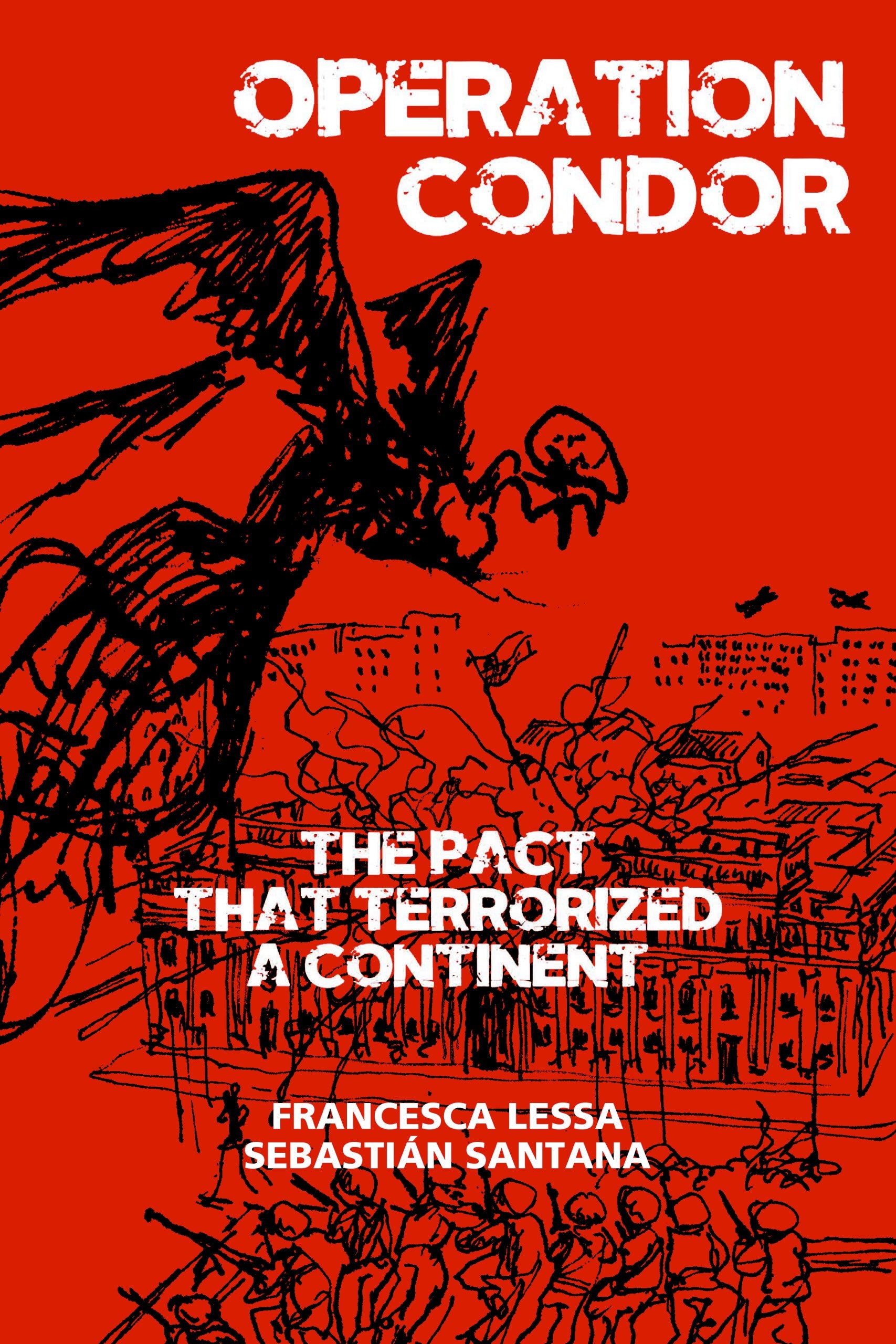
What Missing dramatizes in one family’s struggle, Francesca Lessa’s Operation Condor—now published under Casa Carlini’s Storia imprint—documents on a continental scale. Operation Condor was not a metaphor but a real, coordinated system of terror linking the dictatorships of Chile, Argentina, Uruguay, Brazil, Paraguay, Bolivia, and beyond. Military regimes shared intelligence, hunted exiles across borders, and established an infrastructure of disappearances and clandestine killings that turned South America into a vast, borderless zone of fear.
Lessa shows how this system relied on more than torture chambers and secret flights. It depended on paperwork: classified cables, diplomatic notes, and judicial evasions that laundered violence into “security operations” and “counter-subversion.” The same logic that erased Charles Horman—deny, delay, classify, discredit—was replicated across the region. Charles Horman was not just an isolated victim; he was part of an architecture of transnational repression that believed certain lives were expendable so long as they died quietly.
Why we published Operation Condor
For us at Casa Carlini and our Storia imprint, bringing Lessa’s Operation Condor to readers is not an antiquarian exercise in Cold War history. It is a deliberate intervention in how we remember—and how we forget. The Horman case reminds us that democratic societies can outsource their darkest work and then bury the proof under layers of secrecy and euphemism. Missing went unseen for years in the United States precisely because it broke that spell of denial.
Lessa’s book meets Missing on the terrain of memory and expands it. Where the film gives us Jack Lemmon’s haunted eyes and Sissy Spacek’s desperate search, Operation Condor gives us the names and networks, the trials and testimonies, the slow, stubborn work of those who refused to let the disappeared remain buried in silence. Reading it alongside the Charles Horman story exposes a stark truth: the difference between “security policy” and criminal conspiracy is often written not in morality but in classification stamps.
The question that comes back to us
The question, in the end, is not only what happened to Charles Horman, or what Operation Condor did to a generation of Latin Americans. It is what we do with that knowledge now. Are we content to treat Missing as a relic of another era, a film once considered too dangerous to show, now safely folded into the canon? Or can we see in Horman’s story—and in the machinery Lessa describes—a warning about what becomes possible whenever secrecy, fear, and ideology converge?
With Operation Condor, we invite readers to revisit this history not as distant tragedy but as a mirror. The film was banned from our screens; the documents were hidden from our archives; the families were told to be patient, to be quiet, to trust that the truth would emerge someday. It only did because they refused. The least we can do now is read, watch, and remember—and ask, with uncomfortable honesty, what our own governments might be asking us not to see.
Recommended Reading


0 comments