

He stood as a thorn in the side of every comfortable consensus, a man who wielded logic like a scalpel and moral consistency as a weapon.
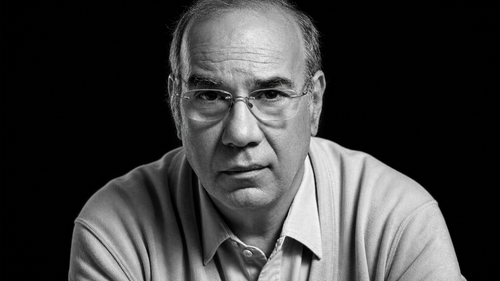
In the vast catalog of Israeli intellectuals, few have proved as prescient—and as polarizing—as Yeshayahu Leibowitz. A neurophysiologist by training, a philosopher by vocation, and a practicing Orthodox Jew by faith, Leibowitz spent his life diagnosing what he saw as Israel’s most dangerous delusion: the belief that it could be both an occupying power and a democratic, moral society. In his seminal 1982 essay collection, Judaism, Human Values, and the Jewish State, published by Harvard University Press, Leibowitz issued the warning that now reads like prophecy:
“The domination of another people will corrupt our institutions and transform Israel into a police state.”
— Judaism, Human Values, and the Jewish State
More than two decades after his death in 1994, and amid Israel’s grinding war in Gaza, his words have come back to haunt the political class that once dismissed him as a crank. Ministers speak openly of “voluntary migration” for Palestinians; extremist clerics sanctify warfare; and the Israel Defense Forces (IDF), long mythologized as a “people’s army,” finds itself dogged by allegations of war crimes. Leibowitz foresaw it all. What he lacked in political influence, he more than made up for in moral clarity.
A heretic among the faithful
Leibowitz was not a man easily slotted into ideological boxes. Born in Riga in 1903 and educated in Berlin, he emigrated to Mandatory Palestine in 1935. He went on to hold chairs in biochemistry and philosophy at the Hebrew University of Jerusalem, edit the monumental Encyclopaedia Hebraica, and publish extensively on religion and ethics. Yet he was known more for what he said than for what he taught.
Leibowitz’s brand of religious Zionism was austere and theocentric. He rejected any notion that the modern Israeli state possessed religious significance. “For Judaism, only God is holy,” he wrote. “Country, nation, and state lack that status.” This made him a sharp critic not only of Israeli governments but of the religious establishment, which he accused of laundering nationalism in theological terms. “The transformation of the Jewish religion into a camouflage for Israeli nationalism,” he warned, “is a counterfeit religion.”
The events of 1967, when Israel seized East Jerusalem, the West Bank, and Gaza, proved to be his Rubicon. While most Israelis celebrated a euphoric victory, Leibowitz issued an unflinching critique: that ruling over a captive population would turn Israel into a colonial regime, complete with all the corrosions that follow. “A state ruling a hostile population… would necessarily become a secret-police state,” he wrote, “with all that this implies for education, free speech, and democratic institutions.” The prediction, then viewed as hyperbolic, today feels disturbingly exact.
“Judeo-Nazi”: The Scandal That Defined a Legacy
His starkest rebuke came during the 1982 Lebanon War, when Israeli troops laid siege to Beirut and allied Christian militias massacred civilians in the Sabra and Shatila refugee camps. Leibowitz described the perpetrators as “Judeo-Nazis,” a term that outraged politicians and theologians alike and nearly landed him in court for incitement. For him, the label was not a literal comparison to the Holocaust but a warning that the logic of occupation erodes moral inhibitions. “Our security,” he wrote, “has been diminished rather than enhanced as a result of the conquests in this war.”
That same year, the Israeli state offered him its highest civilian honor, the Israel Prize. He accepted the award but refused to attend the ceremony. It was a characteristically unbending gesture from a man who was, above all, consistent: a critic of both Palestinian terror and Israeli repression, of religious extremism and secular complacency.
From radical to oracle
Leibowitz's insistence on a complete withdrawal from the occupied territories was widely dismissed during his lifetime as utopian—or worse, defeatist. Yet in recent years, former heads of Shin Bet and other pillars of Israel’s security elite have echoed his core thesis: that the occupation is not merely unsustainable, but existentially corrosive. That the threat to Israel’s future comes not only from rockets, but from its own hand.
Nowhere is this more visible than in Gaza, where the long-term consequences of permanent rule over a disenfranchised population are playing out with grim clarity. Universities flattened. Civilian casualties mounting. Soldiers facing moral disorientation. Leibowitz warned that prolonged domination would degrade the IDF, not only tactically but spiritually. “Its commanders,” he predicted, “will have become military governors, resembling their colleagues in other nations.”
His ultimate fear was not for Israel’s borders, but for its soul. “Inclusion of these Arabs,” he wrote, “will effect the liquidation of the state of Israel as the state of the Jewish people and bring about catastrophe.” In his view, peace was not a political luxury but a moral necessity, because war, when waged indefinitely, does not merely exhaust armies. It devours democracies.
The Conscience That Refused to Conform
To read Leibowitz today is to encounter a moral vocabulary no longer in vogue: one that prefers obligations to entitlements, self-criticism to self-justification, and prophetic warning to patriotic reassurance. His faith was devout, but unsentimental, grounded not in mystical nationalism, but in the austere demands of halakha, Jewish law, which he saw as an ethical discipline rather than a cultural identity. His patriotism, too, was fierce but conditional: rooted in concern for the Jewish people, but resolutely opposed to the sanctification of the state. “For Judaism,” he wrote, “only God is holy. Country, nation, and state lack that status.”
This made him an anomaly in Israeli life. While most religious leaders embraced the state as a vessel of divine destiny, Leibowitz viewed it as an instrument of human power, subject to the same moral scrutiny as any other. He regarded the fusion of religion with state policy not as a strength, but as a danger. In his eyes, the true betrayal of Judaism lay not in secularism, but in those who weaponized religious language to justify territorial ambition and military rule.
The Stakes of Ignoring Prophecy
Leibowitz understood what democracies often forget: that the greatest threat to liberal societies comes not from external enemies, but from internal habits of moral evasion. When domination becomes routine, when occupation is normalized, when the language of security is used to silence dissent and redefine ethics, then democracy begins to hollow out from within. “Security,” he reminded his readers, “is a reality only where there is true peace between neighbors… In the absence of peace there is no security, and no geographic-strategic settlement on the land can change this.”
As the war in Gaza enters its third year and Israel’s international standing continues to deteriorate, the question is no longer whether Leibowitz was right. That much is clear. His warnings, once dismissed as extreme, have become the new consensus among many in Israel’s own military and intelligence circles. The deeper question is whether his voice, now resurgent, will be heard with the seriousness it deserves.
For Israel, and indeed for any democracy entangled in permanent occupation, the stakes are not merely strategic or diplomatic; they are civilizational. Leibowitz did not live to see how accurate his predictions would prove to be. But he left behind a blueprint for moral clarity. Whether that blueprint is read or buried will determine more than the outcome of any conflict. It will shape the kind of country Israel chooses to be.


0 comments