

He wrote like a man trying to reconcile with a God he had already declared dead—and in doing so, gave doubt a moral vocabulary.
Among the lesser-known recipients of the Nobel Prize in Literature, Pär Lagerkvist remains a paradox. In his native Sweden, he is revered; abroad, he is mostly forgotten. Yet his oeuvre—sparse, elemental, and spiritually anguished—resonates with the modern reader far more than its relative obscurity would suggest. In an age that increasingly distrusts both doctrine and despair, Lagerkvist’s quest for moral meaning beyond metaphysics feels urgently contemporary.
He was, in his own words, “a believer without belief.” That tension animates his finest work: the haunting novella The Dwarf (1944), the philosophical parable Barabbas (1950), and a corpus of poetry and drama steeped in spiritual ambiguity. Like Camus with Scandinavian restraint, or Dostoevsky without the orthodoxy, Lagerkvist asked: what does it mean to live humanely in a world where God might no longer speak—or never did?
From Blasphemy to Stockholm
Born in 1891 in Växjö, southern Sweden, Lagerkvist was raised in a devout household where the Lutheran faith shaped both rhythm and worldview. But by early adulthood, he had rejected formal religion—not with rage, but with melancholy. His 1916 manifesto, The Modern Theatre, called for art that addressed the “eternal themes”—love, death, faith, guilt—through modern forms. He was drawn to expressionism, to stark moral contrasts, to the theatrical potential of silence and simplicity.
His early poems were austere and aphoristic, stripped of sentiment but rich in existential dread. Over time, his prose would follow suit. By the 1930s, he had become a literary figure of national significance—both for his style and for his moral clarity. As Europe veered toward fascism, Lagerkvist wrote against tyranny not with slogans, but with allegories.
In 1951, he was awarded the Nobel Prize in Literature “for the artistic vigor and true independence of mind with which he endeavors in his poetry to find answers to the eternal questions confronting mankind.” It was a fitting citation for a writer who spent his life looking for absolutes in a world that seemed to offer only approximations.
The Dwarf Within
Perhaps Lagerkvist’s most unsettling work is The Dwarf, a taut, sinister novella narrated by a court dwarf who serves a Renaissance prince. The narrator, a creature of pure malevolence, is both observer and catalyst of the moral decay around him. He loathes joy, despises women, and detests compassion. “I am the Prince's shadow,” he says, “his dark side.”
It is a study in the banality of evil written before that phrase became fashionable. The dwarf is not mad—just misanthropic, clear-eyed, and ruthlessly consistent. Critics have debated whether he is meant to represent fascism, original sin, or simply the part of the human soul that watches cruelty with a smirk.
What makes The Dwarf terrifying is not its violence, but its internal logic. The dwarf is a philosopher of negation, a creature who cannot be reasoned with because he has no use for reason—only power. In crafting him, Lagerkvist did not invent a monster. He revealed one already within us.
The Gospel According to Barabbas
If The Dwarf explored evil, Barabbas tackled grace. Published in 1950, the novel reimagines the fate of the biblical criminal who was spared in place of Jesus. Barabbas, bewildered by his own release, wanders through a world unable to offer him an explanation. He encounters Christians, witnesses martyrdom, and even visits Golgotha—yet remains unconvinced, even haunted, by the man who died in his place.
The genius of Barabbas lies in its refusal to preach. Barabbas is not converted by miracle or guilt. His search for belief is honest, incremental, and ultimately inconclusive. In the novel’s final moments, he dies without certainty but with a kind of existential reverence—a man shaped by absence rather than revelation.
It was Lagerkvist’s most commercially successful book and one of his most explicitly theological. Yet even here, he resists religious closure. Barabbas is not a morality tale. It is an interrogation of faith, of unearned redemption, of what it means to bear witness to transcendence without being transformed by it.
A European Conscience
Unlike some of his contemporaries, Lagerkvist never courted celebrity. He avoided exile, steered clear of manifestos, and remained skeptical of intellectual grandstanding. Yet he was deeply engaged in the moral politics of his time. During the rise of Nazism, he denounced totalitarianism as a spiritual sickness. After the war, he continued to write about conscience, responsibility, and the ethical demands of a post-God world.
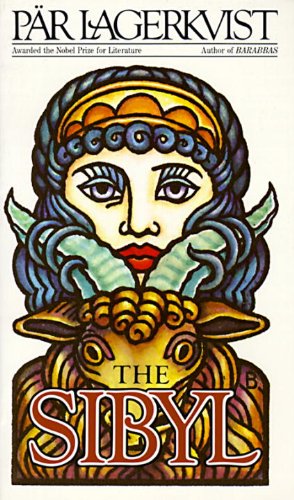
He belonged to a vanishing species: the literary moralist without moralism. He did not lecture. He illuminated. His plays—such as The Man Without a Soul and The Sibyl—offered portraits of moral struggle without tidy conclusions. Like his characters, he distrusted systems and clung to individual dignity.
In this, he echoed figures like Albert Schweitzer and Etty Hillesum—thinkers who sought integrity not in theology, but in conduct. Lagerkvist was not trying to save souls. He was trying to understand them.
Legacy: The Necessary Doubter
In today’s landscape of ideological certainty and curated outrage, Lagerkvist’s quiet, uneasy inquiries feel oddly bracing. He reminds us that moral seriousness need not involve moral certitude, and that disbelief is not an excuse for disengagement. His art was austere, but never hollow. His God was silent, but never absent.
For readers disillusioned with both religious dogma and secular glibness, Lagerkvist offers a third path: the recognition that questions may be more urgent than answers, and that the human need for meaning persists even in the absence of metaphysical guarantees.
His influence lingers in Scandinavian literature and beyond. Writers like J.M. Coetzee, Marilynne Robinson, and Dag Solstad have echoed his stripped-down style and ethical rigor. He is rarely quoted, but often felt—in books that deal honestly with suffering, belief, and the limits of language.
Pär Lagerkvist died in 1974, at the age of 83. His grave bears no grand epitaph—only his name and dates. But his work stands as a monument to a kind of intellectual courage rarely seen today: the willingness to look into the abyss not with despair, but with dignity.
In the end, he was not a preacher, but a witness. Not a builder of systems, but a keeper of questions. And in an age still searching for meaning, that may be the most enduring role of all.
Recommended Reading



0 comments