

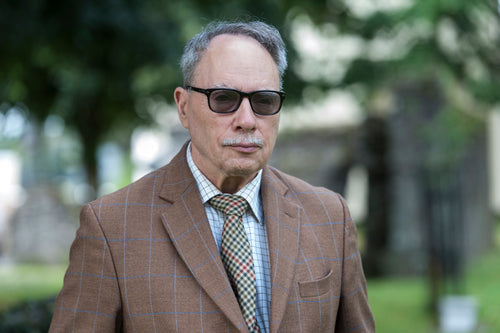
Peter Heinz Duesberg, a pioneering molecular biologist whose groundbreaking work on cancer-causing genes earned him a place among the scientific elite, passed away on January 13, 2026, at a care facility in Lafayette, California. He was 89.
The cause was kidney failure, according to his wife, Sigrid Duesberg.
A Brilliant Beginning
Born in Münster, Germany, on December 2, 1936, to Hilde (Saettele) Duesberg, an ophthalmologist, and Richard Duesberg, an internist, Peter attended the University of Würzburg and the University of Basel, earning an undergraduate degree in chemistry in 1959. He completed his Ph.D. in chemistry at Goethe University Frankfurt in 1963, then moved to the United States in 1964 to join UC Berkeley.
There, he tackled one of the most riveting scientific mysteries of the time: what caused cancer. Using oligonucleotide fingerprinting, Duesberg studied the Rous sarcoma virus that had been discovered in a chicken coop on Long Island. In 1970, working with Peter Vogt, he published groundbreaking results showing that the virus carried a gene—Src—that triggered cancer in birds.
It was the first known oncogene ever discovered.
This work set the stage for Harold E. Varmus and J. Michael Bishop at UC San Francisco, who sequenced the Src gene and discovered that normal cells carry a version of it. Their work earned them the Nobel Prize in 1989. Meanwhile, Duesberg's achievements brought him science's highest honors: he was named Scientist of the Year in 1971 by the California Museum of Science and Industry, elected to the National Academy of Sciences in 1986, and received an Outstanding Investigator Award from the National Institutes of Health that same year.
A Conversation on Koch's Postulates
In 2019, we had the privilege of interviewing Professor Duesberg about Robert Koch's postulates and their relevance to infectious disease research. During that conversation, he demonstrated the intellectual rigor and conviction that defined his career, discussing how Koch's criteria for establishing causation between microbes and disease had shaped modern medicine.
Duesberg spoke passionately about Koch as "the father of 'the germ theory' of disease, which is perhaps the greatest ever success story in medicine and biology." He emphasized how Koch's work on anthrax and tuberculosis had set the foundation for understanding infectious diseases, establishing principles that remained, in his view, fundamental to scientific methodology.
That interview captured both his deep respect for scientific tradition and his willingness to challenge prevailing theories when he believed the evidence warranted it—traits that would define both his greatest contributions and his most contentious controversies.
The Turn Toward Controversy
But Duesberg didn't pursue his research on oncogenes. Instead, he focused on the theory that cancer is caused by damage to chromosomes. In a startling about-face, he contradicted his own research, insisting that oncogenes didn't cause cancer, even heckling colleagues at scientific meetings who supported that idea.
Then, in 1987, Duesberg adopted another contrarian position that would define the rest of his career and overshadow his earlier achievements. He publicly rejected the theory that AIDS was caused by HIV, a link that had formed scientific consensus by that time. Instead, he promoted the theory that AIDS was caused by poverty, malnutrition, recreational drugs, and AZT, an early antiviral drug used to treat the disease. He insisted that HIV was merely a harmless passenger virus.
"He was incredibly smart; he spoke well," recalled David Sanders, a Purdue University virologist who was a graduate student in Duesberg's department at Berkeley in the 1980s. "When HIV was first coming along, he correctly pointed out that we didn't fully understand how it caused disease."
But as time went on and scientists figured out how HIV caused AIDS, through the slow destruction of CD4 white blood cells essential for maintaining the immune system, none of the factors Duesberg proposed as the cause of AIDS led to this immune collapse. The evidence mounted against him, yet he never wavered.
Critics said his misleading advice to former President Thabo Mbeki of South Africa in the early 2000s was instrumental in persuading Mbeki's government to adopt a policy against importing antiviral drugs, resulting in hundreds of thousands of deaths.
Yet Duesberg's anti-establishment views won him a popular following through two documentary films and his 1996 book, "Inventing the AIDS Virus." To some, he embodied a romantic ideal: the brilliant rebel battling overwhelming opposition in the name of truth. "Duesberg appealed to all sorts of different parts of our national psyche," Sanders observed.
Randy Schekman, who oversaw Duesberg's lab as chair of Berkeley's department of molecular and cell biology, remembered him as witty and charming. "He had this allure, and people were attracted to him," Schekman said. "But he had a dark side." After staking out his unorthodox position on AIDS, Duesberg found himself marginalized, no longer invited to scientific meetings or asked to participate in discussions.
"The whole dissident idea attracts a lot of crazies," he told Newsweek in 2009. "And then all of a sudden, without realizing it, you've become one of them."
His ideas continued to draw attention for years. Science magazine published an investigation in 1994 that included extensive input from Duesberg. In 2012, he appeared on "The Joe Rogan Experience" podcast. "He loved the limelight, and reporters would flock to him because of his outrageous attitude," Schekman recalled.
Among his allies were Christine Maggiore, who campaigned against using antiretroviral drugs to prevent HIV transmission from mothers to children. She died of AIDS in 2008 after passing the virus to her 3-year-old daughter, who had died three years earlier.
A Complex Legacy
Peter Duesberg's career presents one of the most complicated legacies in modern biology. His early work on retroviruses and oncogenes was genuinely revolutionary, contributing to our fundamental understanding of cancer. He continued his cancer research throughout his career, though he had difficulty securing funding and finding colleagues. In 2007, he published an article on cancer in Scientific American, accompanied by an editorial titled "When Pariahs Have Good Ideas" that noted: "as wrong as Duesberg surely is about H.I.V., there is at least a chance that he is significantly right about cancer."
He trained many graduate students and postdoctoral fellows who went on to successful scientific careers, passing on his passion for rigorous experimental work. He held an appointment at the University of Heidelberg in Germany starting in 1997 and retired from Berkeley in 2022.
Yet his persistent denial of HIV as the cause of AIDS, maintained even as antiretroviral therapies transformed the disease from a death sentence to a manageable condition, remains deeply troubling. The scientific community has overwhelmingly rejected his HIV/AIDS theories, and the real-world consequences of their influence, particularly in South Africa, represent a tragic chapter in public health history.
Duesberg is survived by his wife, Sigrid; their four children, Nicola, Max, and Susanne Duesberg and Sibyl Kamdar; two grandchildren; a brother, Hans; and a sister, Christa Noah Duesberg.
His story serves as a reminder that brilliance in one domain does not guarantee wisdom in another, and that even the most accomplished scientists bear a profound responsibility for how their ideas affect the world. He leaves behind a body of work that will be remembered both for its brilliant contributions to cancer research and as a cautionary tale about the perils of undermining public trust in established science during an epidemic.
Recommended Reading

0 comments