

According to the ancient historian Plutarch, Alexander the Great never traveled without a copy of Homer's Iliad. Said to have been annotated by his tutor, Aristotle, the volume reportedly rested beside his bed, alongside his dagger, throughout his military campaigns. Whether every detail of that story is true is impossible to know. What is beyond dispute is that Alexander saw in Achilles not merely a literary hero, but a model for his own life. Few books have shaped a reader so profoundly, and few poets have shaped history so lastingly as Homer.
Nearly three thousand years after the Iliad and the Odyssey emerged from the oral traditions of ancient Greece, Homer remains a foundation of Western literature. His poems educated generations of Greeks, inspired philosophers and dramatists, and echo through writers from Virgil and Dante to James Joyce. More than tales of heroes and monsters, they are enduring meditations on anger, loss, honor, homecoming, and the fragile bonds that define us.
And yet Homer is often misunderstood. The Iliad is remembered as a story of war, but it is just as much a meditation on grief: it opens with the rage of Achilles and closes with one of literature's most moving scenes of reconciliation, as a grieving father and his son's killer recognize each other's shared humanity. The Odyssey is celebrated for its adventures, but beneath the monsters and magic lies a searching reflection on identity, endurance, and what it truly means to come home.
Joel Christensen has spent his career helping modern readers rediscover these poems, not as relics of a distant civilization, but as living works that still illuminate our own. In the conversation that follows, we explore the mysteries surrounding Homer, the power of oral poetry, and why these ancient epics continue to speak with such startling clarity to the world today.
Charles Carlini: The Iliad opens with a single word: “rage.” Why do you think Homer built one of history's greatest epics around anger, rather than heroism or glory?
Joel Christensen: This is a great question that cuts to the core of what makes Homeric epic different: its resistance to simplistic interpretation. Homer doesn‘t moralize—the epics can present characters moralizing, but their sentiments end up being complicated by the context or some later event. Both the Iliad and the Odyssey present ideas for audiences to consider and weigh for themselves.
When it comes to violence, I agree with the majority of your question: the Iliad ultimately presents a critique of violence. It contrasts the rhetoric of glory (Greek kleos)—a shortened life in exchange for war booty and battlefield toils—with the actual cost. Central to this are two figures: Achilles and Hektor. Achilles loses the person he loves most—Patroklos—because of a selfish concern for his own honor. Unlike Achilles, who chooses to fight, Hektor has no choice and yet still faces the loss of everything.
The prolonged scenes of war serve to drive home its savagery. The laments and the deaths of some of the epic‘s most noble characters (Patroklos and Sarpedon) leave the impression that the only justification for violence is to defend the ones you love.
I believe that ’Homer‘ is a traditional name for the poetic tradition, so I am always reluctant to ascribe intent. But I do believe that the design and function of Homeric poetry was/is to be dialogic, to bring contrary ideas into the same space for audiences to work through.
CC: Modern readers often assume the Iliad glorifies war, yet many come away seeing it as one of literature's strongest indictments of violence. Can a poem really hold both at once, or is one reading closer to what Homer intended?
JC: The funny thing is that I took a very long time to have any respect for Achilles at all. I remember writing in a high school freshman year English class that Achilles was a “twit.” So, this may be your hardest question!
The truth is that Achilles is, in a way, a cipher for most of us, representing not just a stage in life (say, the end of adolescence, right before the onset of stable adulthood), but also an existential crisis. He starts in book 1, shocked that the world isn‘t fair and that political authority doesn't honor him the way he thought it would. He overreacts and wants to punish the world for his own suffering. When we find him again in book 9, he is in full-on angry philosopher mode, interrogating the very society that shaped him.
Achilles has big emotions—I think that‘s part of his appeal. Yet, he is also our earliest tragic figure, and I don‘t mean that he possesses some “flaw” as the Christian reading of Aristotle‘s Poetics might suggest. Instead, he discovers too late that he is responsible for his own suffering when Patroclus dies.
What many people often miss is that Achilles prays to Zeus for the Greeks to suffer and die as retribution for the slight to his honor. He gets his wish, but doesn't imagine that Patroclus would be among those who perish. Achilles learns the hard way that the world extends beyond him, that no amount of physical prowess or divine blessing can alter the fundamental fact of his mortality and the mortality of those he loves. Through him and others, we learn that our lives gain meaning from those who care for us.
Achilles remains attractive, in part, due to the outsized nature of his emotions—who hasn't identified with completely losing it at least once or twice in their lives? At the same time, he serves as a vehicle for contemplating our mortality and the human condition. Ultimately, his tragic arc—that he is the cause of his own suffering—also subtly reflects the truest aspect of human nature. We could collectively make this world a paradise, yet we are constantly overreacting and overlooking what truly matters.
CC: Achilles is among literature's most famous heroes, yet he‘s also proud, wounded, and painfully human. What do you think keeps him resonating across so many centuries?
JC: The short answer is that it matters less than people used to think! However, there are still some differences.
I am firmly in the camp of the long oral tradition. It used to be that those who believed in a single poet and the importance of textualization approached Homer very differently from those committed to the poems' orality. Now, there's much more overlap. Textualists generally acknowledge that the poetics and aesthetics of the epics we possess are orally derived and must be approached differently than a work like Virgil‘s Aeneid or Milton's Paradise Lost. A majority of oralists acknowledge that the process of textualization changed the epics, both in the original leap from performance to text and in the way the epics have been altered over time.
For most people who read the epics in translation, the difference may be minimal, except that translators make decisions based on our culture's aesthetics that radically change the results of translation. A case in point among recent translations are the formal differences between Daniel Mendelsohn‘s and Emily Wilson‘s Odysseys. Mendelsohn preserves much more of Homer's alienness to modern poetics with his longer line, repetitions, and consistent formulas. Wilson loses much of this in favor of a shorter line and an easier story.
In addition to the differences in how translation audiences receive a text, interpretations also change based on the assumptions people bring to a poem. Consider the beginning of the Odyssey. The narrator states that Odysseus' men died “because of their own recklessness.” Only 20 lines later, Zeus complains that mortals worsen their fates “because of their own recklessness.” The Greek words used in both instances are identical. Yet, in a translation like Wilson‘s, the phrasing is completely different. In an oral-performance context, this repetition sings, echoes, and impresses upon the audience that human responsibility is critical to understanding and evaluating the Odyssey. When reading Wilson‘s translation, this theme may still emerge through the action, but it is far less emphasized.
Therefore, in some cases, recognizing that repetition in oral poetry is not merely compositional but also accumulates meaning is critical to evaluating Homer from a literary perspective. Much is lost in translation, and the severity of this loss depends on the translator‘s approach.
CC: Scholars still debate whether Homer was a single poet, several poets, or the product of a long oral tradition. Does that uncertainty change how we should read the poems, or does it matter less than we think?
JC: I have a whole chapter about this in my recent Why Odysseus? Survivor, Scoundrel, (Anti)Hero. I believe the power of Homer lies in the poetry itself and how distinct the Homeric dialect and epic form are from any other literature I have ever read. Consequently, I think translators face a nearly impossible task, perhaps as severe as that between Skylla and Charybdis!
American translator Lawrence Venuti has described translation partly through the lens of “domestication,” asking whether an adaptation brings the original text to the target culture or takes the target culture closer to the original. Translators like Mendelsohn and Richmond Lattimore, by preserving more of the Homeric epic‘s form, attempt to bring English to Homer. Others, such as Stanley Lombardo and Emily Wilson, who eschew repetition and formal epic aspects, attempt to bring Homer to English. The former pair produce translations that modern readers find difficult to navigate (because we no longer live in an era where people read a lot of long-form poetry). The latter pair produce works that convey the story more clearly but set aside formal aspects that support epic themes and meaning.
To lose the form is to lose the poetry; yet, the story is clearer to modern readers, and that kind of power is important. However, the full power of epic poetry also resides in its form! To be honest, when I teach, I have always favored translations that emphasize the story over the form. But there‘s no translation I have ever read that makes me think, ”This is Homer.”
CC: Translating Homer is as much interpretation as it is language. What gets lost first—the poetry or the power—when a translator has to choose?
JC: My previous answer probably makes it clear how difficult this question is for me! I tailor my choice to the individual asking. If I encounter a rare reader of extensive poetry, I suggest Lattimore, as his longer lines and formal aspects better bring Homer alive. Most often, however, I recommend Lombardo‘s or Wilson‘s translation because the narrative comes through more clearly.
CC: The Odyssey is remembered as an adventure story, but its real subject may be identity, homecoming, and endurance. What do you think readers today miss when they read it just for the monsters and the plot?
JC: I believe most readings of the Odyssey overlook the poem‘s deep psychological meaning (something I explore in The Many-Minded Man: The Odyssey, Psychology, and the Therapy of Epic). Zeus‘s initial comments about human responsibility for our own suffering are meant to serve as an interpretive framework for the entire poem. We are prompted to ask how or whether everyone in the poem has worsened their own life, not just Odysseus‘s companions and the suitors, but Odysseus himself. Simultaneously, the poem invites us to consider the corollary: whether our lives can be improved through care and intelligence. Finally, I think everyone shies away from the more uncomfortable political questions in the epic‘s final book: whether half of the Ithacans who pursue Odysseus for murdering their family members have a valid point, and what it means that Athena ends the conflict by promising to erase their memories to “let wealth and peace be enough.”
I believe that—apart from the reflections on personal identity and the insistence that our identities are forged in our relationships with others—this political question is the most pressing for the modern world. How do we continue to live with community members who have committed violence against us? How do we allow ourselves to be governed by an authority that has murdered our loved ones? Can we stop cycles of generational violence without losing our memory of who we are?
CC: Christopher Nolan‘s film adaptation of the Odyssey, starring Matt Damon as Odysseus, opens in theaters this month. As someone who has spent a career with the original text, what are you hoping—or worried—a big-budget adaptation will get right about the poem?
JC: I have seen the movie and reviewed it, but I will avoid spoilers here!
My sincerest hope for the film was that it would preserve some of the epic‘s moral and interpretive ambiguity and perhaps echo its emphasis on the danger of storytelling—something difficult for a motion picture to achieve. I am less concerned with historical accuracy than I am with an adaptation correctly portraying some of the core themes. In this case, I want a portrayal of Odysseus that understands Greek heroes are not paragons of virtue, but are vulnerable to the same kinds of mistakes that we all are.
CC: Penelope waits twenty years while Odysseus wanders, and yet she's often treated as a footnote to his journey. How do you read her role in the poem's idea of homecoming?
JC: Penelope is, in the Homeric epic, the idealized heroic wife. Over time, the romance between Odysseus and his wife has become more prominent. In the poem itself, she is inscrutable. Central to interpretive challenges is determining when she knows Odysseus has come home. She is, in a way, the ultimate arbiter of his identity. She is also trapped in a story over which she has limited agency.
For Odysseus to come home, to experience that nostos (Greek for “homecoming”), he needs to be reunited with his son, mother figure (Eurykleia), his wife, and his father. But his reunion with Penelope is so potent that some ancient scholars imagined the poem should end when they retire to their marital bed. I worry, however, that like Argos the dog, the Homeric Penelope really only suffers in order to amplify Odysseus‘s homecoming.
CC: Ancient audiences experienced Homer as performance, not text. What changes when these epics are heard aloud rather than read silently on the page?
JC: The changes are twofold: aural experience allows us to make connections that visual engagement does not; there‘s also a loss of community in the process of individual reading.
I think the musicality of the poems is lost, as is the way meaning accumulates over time through repetitions. In addition, I think the performance context matters. Generally, we read alone, silently. Ancient Epic was heard in groups who responded to each other's responses. The emotional and intellectual amplification of this process cannot be overstated. Consciously and subconsciously, we have different responses to spectacle and art when we are surrounded by others experiencing it at the same time.
CC: Every generation finds something new in Homer. Given our own era of division, upheaval, and prolonged conflict, is there a passage that feels newly relevant to you right now?
JC: The simile in Book 8, which appears after Odysseus asks Demodokos to sing the song of the wooden horse, has taken on new meaning for me. I used to interpret Odysseus‘s request for this song and his subsequent second bout of tears (while disguised or unnamed among his Phaeacian hosts) as purely manipulative. However, Jonathan Shay‘s Odysseus in America and characterizations in films like The Return suggest that the simile comparing Odysseus to a woman witnessing her husband‘s death in a besieged city might imply a capacity for sympathy on Odysseus‘s part. This is a brief glimpse, similar to Achilles weeping alongside Priam in the Iliad as they both recall their losses. If anything, this is the most crucial lesson of Homeric epic: our recognition that others feel and suffer as we do is what defines our humanity.
CC: If Homer sat in on one of your classes and heard how people talk about his work today, what do you think would surprise him most?
JC: Well, considering Homer didn't exist...
I believe that a Homer or an epic singer from the ancient world would be astonished that modern audiences sometimes perceive Achilles and Odysseus as figures to be emulated. They are clearly depicted as dangers to those around them. Heroes are not meant to be idolized! Instead, they should prompt us to envision worlds where their presence is no longer necessary.
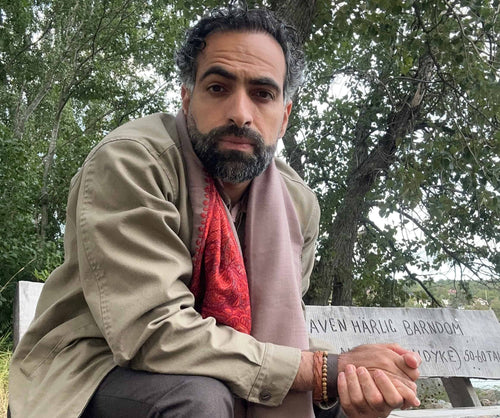
Photo by Alex Irklievski
Recommended Reading




0 comments