

In the early 1930s, two of the most brilliant economists in the world engaged in a public debate in academic journals that was so fierce, so personal, and so consequential that its reverberations are still being felt in government treasuries and central banks today. Friedrich Hayek, newly arrived at the London School of Economics from Vienna, had written a devastating review of John Maynard Keynes's Treatise on Money, attacking its theoretical foundations with a precision that left little standing. Keynes, who was not accustomed to being taken apart in print, responded by attacking Hayek's own book with equal ferocity, dismissing it as one of the most frightful muddles he had ever read. Their colleagues watched with a mixture of intellectual excitement and alarm. What was being argued out in these exchanges was not merely a technical dispute about monetary theory but a fundamental disagreement about the nature of markets, the role of government, and the proper response to economic crisis, a disagreement that the Great Depression was making urgently, devastatingly practical. Keynes and Hayek were not simply debating economics. They were debating the future of capitalism, and both of them knew it.
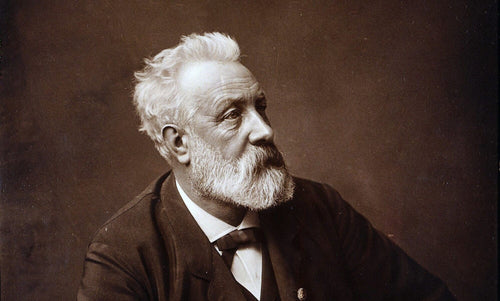
Austrian-born British economist Friedrich Hayek (1899–1992) is best known for his defense of classical liberalism and what is now called Austrian economics, a tradition that placed the spontaneous order of free markets at the center of its understanding of how societies coordinate the knowledge and preferences of millions of individuals without central direction. The winner of the 1974 Nobel Prize in Economics, shared with Gunnar Myrdal for pioneering work in the theory of money and economic fluctuations and for penetrating analysis of the interdependence of economic, social, and institutional phenomena, Hayek produced a body of work that fell out of fashion in the mid-twentieth century and returned, with considerable force, in the 1970s and 1980s as the Keynesian consensus began to crack. The argument he had been making all along, that government intervention distorts the price signals on which a market economy depends, suddenly found an audience in Downing Street and the White House that it had never found in the academies.
Few writers have told the story of that intellectual rivalry with more clarity or more narrative drive than Nicholas Wapshott, author of Keynes Hayek: The Clash That Defined Modern Economics. Wapshott brings to the subject both a journalist's feel for the human drama and a genuine grasp of the economic arguments at stake, tracing the conflict between two men who disagreed about almost everything and yet, in their disagreement, defined the terms of the most important economic debate of the modern era.
In the conversation that follows, Wapshott reflects on Hayek's legacy, the enduring relevance of the clash between these two titanic figures, and why an argument that began in academic journals in the 1930s continues to shape the choices governments make and the consequences citizens live with today.


0 comments