

On the evening of May 29, 1913, the Théâtre des Champs-Élysées in Paris hosted the premiere of a new ballet commissioned by Sergei Diaghilev and his Ballets Russes. The composer was Igor Stravinsky, thirty years old and already celebrated for two previous ballets that had dazzled Parisian audiences. What happened that night was different. Within minutes of the opening bars, the audience began to react. Catcalls and whistles competed with applause from those who understood what they were hearing. The noise grew so loud that the dancers could no longer hear the orchestra, and Diaghilev ordered the houselights switched on and off in a desperate attempt to restore order. Stravinsky left his seat and went backstage, where he reportedly grabbed the coat tails of the choreographer Nijinsky to stop him from rushing into the audience. By the end of the evening, what became known as the Rite of Spring riot had passed into legend. The ballet that provoked it, The Rite of Spring, with its savage rhythms, its deliberate brutality of sound, and its complete rejection of everything a Parisian ballet audience expected to hear, would go on to be regarded as the most important single piece of music composed in the twentieth century. The audience that booed it that evening had been present, without knowing it, at a rupture in musical history.
The Russian composer Igor Stravinsky (1882–1971) was one of the most influential composers of the twentieth century, a figure whose career spanned from the early 1900s, when he composed ballets inspired by Russian myth and the era's revived interest in distinctly Russian culture, to the post-war experimentation in compositional styles that kept him at the forefront of musical development long after most composers of his generation had settled into a fixed idiom. Though born in the nineteenth century, he lived and worked long enough to see his works inspire progressive rock music, just as he himself had been inspired by earlier masters, including Bach and Tchaikovsky. His importance in the history of music is unquestionable, and his willingness to reinvent himself across eight decades of composition, moving from the primitivism of The Rite of Spring to neoclassicism and then to serialism, remains one of the most remarkable creative trajectories in Western music.
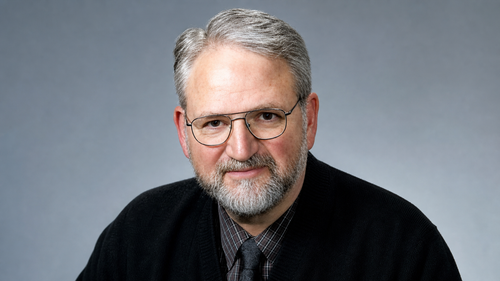
To explore that trajectory with the depth it demands requires a guide who understands Stravinsky from the inside, as both a scholar and a practicing musician. John Heiss, Director of the Contemporary Ensemble at New England Conservatory, where he teaches in the flute, chamber music, composition, music history, and music theory departments, brings to this conversation the perspective of an active composer, conductor, flutist, and teacher whose engagement with Stravinsky's work is as practical as it is analytical.
In the conversation that follows, Heiss guides us through the extraordinary range of Stravinsky's achievement, illuminating the technical innovations, the stylistic transformations, and the enduring vitality of a composer who was present at his own riot in 1913 and spent the next six decades proving that the audience's shock had been entirely justified.
Recommended Reading



0 comments