

In the winter of 1649, René Descartes received an invitation he had been resisting for years, and finally, against his better judgment, accepted it. Queen Christina of Sweden, one of the most formidable and intellectually voracious monarchs in Europe, had been corresponding with him for some time and now insisted he come to Stockholm to tutor her in philosophy in person. Descartes, who had spent decades cultivating a life of deliberate obscurity in the Netherlands, rising at noon, working in bed, carefully avoiding the kind of public attention that had destroyed Galileo, made the journey north in autumn and arrived to find that the Queen expected her philosophy lessons at five o'clock in the morning. He was 53, accustomed to his late rising, and wholly unprepared for a Swedish winter. Within months, he had contracted pneumonia. He died in February 1650, having spent the final chapter of his life shivering in a foreign palace at an ungodly hour, explaining the nature of mind to a queen who had summoned him like a book she wanted read. It was, for a man who had devoted his life to the careful management of his own existence, a spectacularly uncontrolled ending.
René Descartes (1596–1650) is one of those rare figures whose influence on Western thought is so total and so thoroughly absorbed that it has become almost invisible, the intellectual water in which modern philosophy still swims. His decision to doubt everything that could be doubted and rebuild knowledge from the ground up on secure foundations was not merely a methodological choice but a civilizational turning point, the moment at which medieval deference to authority gave way to the modern insistence that reason alone must be the arbiter of truth. His integration of philosophy with mathematics and natural science reshaped both disciplines, giving us analytic geometry, a new framework for understanding the physical world, and a set of questions about mind, body, and knowledge that have never been fully resolved and show no signs of becoming so.
What makes Descartes so difficult to see clearly, despite his apparent familiarity, is the gap between the tidy philosophical legend and the far more complicated historical reality. The Descartes of the textbooks, the isolated genius producing timeless arguments in a vacuum, bears only a partial resemblance to the Descartes of history: a man deeply embedded in the scientific debates of his era, responsive to the work of contemporaries, shaped by a Jesuit education he spent his career both drawing on and arguing against, and engaged in a lifelong negotiation between intellectual boldness and the very real dangers of saying too much in an age when the Church's patience with philosophical novelty had definite limits. To understand what Descartes actually achieved, and why it mattered, requires recovering that historical figure in full.
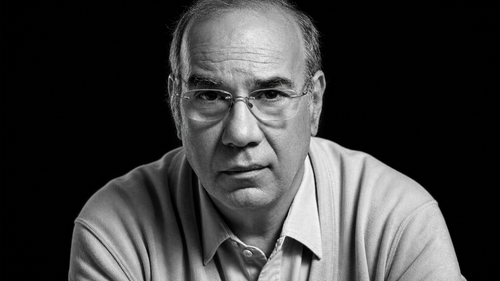
It is precisely that recovery that Stephen Gaukroger has devoted much of his distinguished career to undertaking. Professor of History of Philosophy and History of Science at the University of Sydney and the author of ten books spanning 17th and 18th-century science and philosophy, Gaukroger brings to Descartes both the philosophical precision to engage seriously with his arguments and the historian's command of context necessary to situate them in the world that produced them. His landmark Descartes: An Intellectual Biography remains the most comprehensive and searching account of how Descartes's thought developed, where it came from, and what it was actually trying to accomplish, restoring to one of philosophy's most familiar figures the complexity and the strangeness he has always deserved. In this interview, Gaukroger reflects on Descartes's revolutionary ambitions, his relationship to the science of his era, and why the founder of modern philosophy remains, four centuries on, productively unfinished business.
Charles Carlini: You’ve written quite extensively on the French philosopher and mathematician René Descartes, whom many consider to be the most influential of all 17th-century thinkers. What originally piqued your interest in him?
Stephen Gaukroger: What piqued my interest was Descartes as a natural philosopher (a scientist in modern terminology) rather than someone who was concerned with skepticism and the foundations for knowledge, which is how he is taught in university introductory philosophy courses. While in Cambridge studying for my Ph.D., I was in a History and Philosophy of Science Department, and it gradually became clear that Descartes’ natural philosophy was a lot richer and more interesting than what had been taken to be his epistemology.
CC: Descartes is often referred to as the “father of modern philosophy.” Yet he made immense contributions across an exceptionally wide range of fields and disciplines outside philosophy. Can you give us a sense of some of these important contributions?
SG: Descartes made contributions to three main areas outside philosophy. In optics, he discovered the sine law of refraction (independently of the Dutch astronomer Willebrord Snellius, aka Snell, who also discovered it), which enabled him to calculate the shape of a lens that would bring light rays to a sharp focus. This was crucial for improving telescope and microscope lenses. In physiology, he is often credited with the discovery of reflex action, but this is questionable because he does not clearly distinguish between instinctive and reflex responses. In mathematics, he played a key role in the development of modern algebra, inventing coordinate geometry. Making sense of the different fields was something that I set out to do in my biography of Descartes, showing how they were connected to one another, how Descartes' interests developed over time, and why they changed.
CC: Descartes came to philosophy and the natural sciences rather late in life. In fact, he didn’t publish his first book until he was 41. What took him so long to publish his ideas? And was this typical of the age?
SG: The fact that he experimented with different writing genres—textbook, meditations, dialogue, essays—suggests that he had to find the right way of expressing his ideas. Some earlier projects, such as The World and Man, were abandoned only to be reformulated later in different terms. In much of the work he did in algebra and optics in the 1620s and early 1630s, he focused on discovery, which was not something that lent itself easily to book-form.
CC: In your book Descartes: An Intellectual Biography, you mention that Descartes was “controversial, reviled and celebrated … not only in his own lifetime, but for the next 150 or so years.” How so?
SG: It was believed by the Catholic Church, and by Dutch Protestants, that Descartes’ work was contrary to certain central religious tenets. At a time when philosophy was a university subject taught and supervised by clerics, metaphysical theses were considered in terms of any heterodox consequences.
CC: In spite of all of his varied contributions and accomplishments, Descartes will be forever associated with his apothegm “Cogito, ergo sum” (I’m thinking, therefore I am)—words etched in the memories of most college students who’ve ever taken a first-year philosophy course. What is the significance of this terse remark?
SG: The Cogito is supposed to play two roles. First, it stops the regress of skeptical doubt because it cannot be doubted. Second, it is supposed to provide a secure starting point from which to build knowledge from scratch. It is much more successful in the first respect than in the second. Specifically, Descartes has left himself very little to go on in the Cogito, and to rebuild knowledge, he also needed a few other things, such as the existence of a good God who would not deceive us.
CC: Descartes' insights into the nature of knowledge and the mind have animated vigorous debate over the centuries. Today, we’re still trying to understand the ramifications of his theories. By what “twists and turns of his intellect” did he arrive at his ideas and conclusions?
SG: One of the main points of Descartes' biography was to uncover these twists and turns. Descartes’ interest began with questions in mathematics, particularly in the form of “universal mathematics” that would unify all mathematical fields. He subsequently tried to extend this to “universal method,” which, he thought, would unify the whole of knowledge. At the same time, he was working on geometrical optics, and by the late 1620s, his interest in the physical basis of light had led him to an account of cosmology. With the condemnation of Galileo, however, Descartes abandoned this work in the early 1630s and began to explore ways to counter the Church’s objections to cosmological theories (particularly regarding heliocentrism); he worked out a way of stripping back knowledge of absolute basics and rebuilding a new picture of the world, one ruled by mathematics and mechanics.
CC: What role, if any, did religion play in Descartes’ life and work?
SG: Although he was never a devout man, Descartes had a residual commitment to Catholicism throughout his life. However, he was not particularly orthodox; then again, it’s possible that few non-clerics who regarded themselves as Catholics were overly concerned about orthodoxy—being on the right side of the Catholic/Protestant divide was probably enough for most Catholics.
CC: In A. C. Grayling's 2005 biography Descartes: The Life and Times of a Genius, he speculates that Descartes may have been a Jesuit spy or intelligence gatherer, which, he believes, helps explain how he came to be in so many places of military and political significance. Do you find any merit in Grayling’s claim?
SG: I don’t believe there is any such thing as a Jesuit spy: what intelligence could they possibly want to gather? The comment just misunderstands the Jesuits and the nature of spying in the 17th century. As for the choice of Descartes as such a “spy,” I cannot begin to imagine why a non-Jesuit—and someone whose views the Jesuits opposed—would have been chosen. And again, what information would he have had access to that they would have been interested in? The claim is sheer fantasy.
CC: In another of your books, entitled Cartesian Logic, you tackle the development and nature of deductive inference as practiced in the 17th century. How did Descartes’ notion of inference differ from that of Aristotle? And why do you suppose Descartes’ conception of inference, though influential, is largely ignored today?
SG: Questions of inference were tied up with methods of discovery in the 17th century, and the failures of Aristotelian physics and cosmology were traced back to a faulty method of discovery on Aristotle’s part, namely his syllogistic (theory of inference). Descartes, like his contemporaries and successors, thought that inferences had to be informative, and they rejected deductive forms of argument because the conclusion just restated something that was already in the premises. Gottfried von Leibniz saw the problems here, but he was alone until the 19th century, when the algebraization of logic by George Boole and then Gottlob Frege cleared up basic misunderstandings about the nature of deduction.
CC: Today, Descartes’ Meditations on First Philosophy is regarded as “one of the most influential texts in the history of philosophy.” However, during the time of its publication, it was widely criticized. How did people’s thinking of the Meditations evolve?
SG: Descartes himself thought one should read the Meditations once and then put it aside and get to the real stuff: the natural philosophy. His "rationalist" successors, Baruch Spinoza and Leibniz, had no time for the radical skepticism of the meditations, and David Hume noted that the book was hard to get in the 18th century. It was taken up in the 20th century, but in different ways in the Anglophone analytical tradition, where a concern with questions of skepticism (prompted by a revival of the British empiricist tradition rather than Descartes himself) reintroduced Descartes’ Meditations along with skeptical writings of George Berkeley and Hume. In the continental tradition, the concern was with Descartes’ account of the nature of subjectivity and the relation between mind and body.
CC: Sadly, Descartes died prematurely in 1650 in Stockholm, Sweden, after catching pneumonia from the unfriendly Swedish climate. At least this is the common view surrounding his death. But according to Theodor Ebert, a German academic at the University of Erlangen, Descartes may have been murdered by a Catholic priest. What is your take on this claim?
After Descartes’ death, there was some question of Protestants having poisoned Descartes because they thought that he was involved in an attempt to convert Catherine Queen Christina of Sweden to Catholicism. She did convert soon afterward, but [René] Descartes always steered clear of confessional issues, and it is unlikely that he would even have had a view on her religion. I cannot imagine why a Catholic would have wanted to murder him. Reports from the time indicate that he died of natural causes, and there is no reason to dispute these findings.
Recommended Reading



0 comments