

How Kindle Direct Publishing destroyed the old gatekeepers and created a new problem: millions of books competing for attention
In 2011, a software engineer named Andy Weir uploaded a novel to Amazon and priced it at 99 cents. He’d already tried the traditional route. Agents and publishers had passed on the manuscript, a detailed, science-heavy survival story about an astronaut stranded on Mars. So he put it on Kindle himself, just to see if anyone would read it. Within months, “The Martian” had sold tens of thousands of copies through word of mouth alone. Within two years, a major publisher bought the rights. Within four, Ridley Scott had turned it into a film starring Matt Damon.
For most of the twentieth century, that story would have been impossible. Becoming a published author meant getting past someone first. An editor had to like your manuscript, a publisher had to believe there was a market for it, and if they said no, that was usually the end of the story. It didn’t matter how much you believed in your book or how many years you’d spent writing it. Publishing had gates, and other people held the keys. Weir’s book proved those gates could be skipped entirely, and he wasn’t the only one to prove it.
The gate finally opened
The old system had real advantages. Publishers could invest in editing, cover design, printing, distribution, and publicity, and they could take financial risks on books they believed in. But the same system rejected plenty of good books along the way. Publishers could be conservative, misjudge a new genre, favor established names, or simply decide a book was too strange to sell. For an aspiring author, the process was often brutal: write the manuscript, send letters, wait, get rejected, send more letters, wait again. Self-publishing changed the question writers were asking. Instead of “will a publisher take my book,” an author could ask why they needed a publisher at all.
Amazon didn’t invent self-publishing. Vanity presses and print-on-demand companies had existed for decades. What Amazon did was combine self-publishing with a massive retail marketplace through Kindle Direct Publishing, or KDP. Authors could upload a manuscript and a cover, set a price, and reach readers worldwide without a warehouse, a printing press, or a bookstore. An author could sell one copy without 999 others sitting unsold in storage. For someone who’d spent years hearing that nobody wanted their book, that was extraordinary.
Then everybody started publishing
This is where the revolution turned into a different kind of problem. Once the gatekeepers disappeared, the gates didn’t just open for talented writers. They opened for everyone. The brilliant novelist could publish, and so could the mediocre one. The trained historian could publish, and so could someone who’d watched six months of YouTube videos about Rome. Carefully edited books sat next to books nobody seems to have proofread. The marketplace filled with serious scholarship, memoirs, romance, thrillers, conspiracy theories, poetry, cookbooks, and plenty of books that probably shouldn't have existed at all. It became enormous, and increasingly hard to navigate.
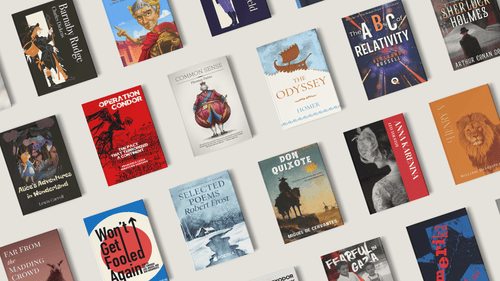
That’s the part of the self-publishing story people tend to miss: getting published got easier, but getting noticed got much harder. A bookstore might hold 20,000 titles. Amazon holds tens of millions. At that scale, simply having a book available stops being impressive. The hard part is getting anyone to see it, and that created a new kind of gatekeeper: the algorithm. In the old world, an editor decided which manuscripts deserved attention. Now, Amazon tracks what people search for, click, buy, and review, and uses that to decide what gets recommended. A book can be well-written and professionally produced and still vanish almost immediately. The author has beaten the old gatekeeper. They haven’t necessarily beaten the marketplace.
Success stories, and outlaws
Weir’s story wasn’t a fluke. Self-publishing produced a genuine class of successful independent authors, especially in genre fiction like romance, fantasy, and mystery, where writers could respond quickly to what readers wanted. Some eventually signed with traditional publishers; others had no interest in that at all. They’d discovered something publishers had spent decades insisting was impossible: you could build a publishing business yourself, own your rights, set your own prices, talk directly to readers, and keep far more of the revenue.
But the same openness attracted people looking to exploit the system rather than write books. There were AI-generated books, keyword-stuffed titles built to game search results, copied or lightly reworded content, fake reviews, and publishers churning out huge volumes of low-effort books just to occupy shelf space. The economics rewarded volume. If another book costs little to produce, why not publish ten? If ten sell, why not fifty? The platform began rewarding speed and discoverability as much as quality, and the number of books started growing far faster than the number of readers.
Too much choice, and the gatekeepers return
That created a problem traditional publishing never faced at this scale: too much choice. A reader in a bookstore might have 10,000 books around them, and they can compare those. An Amazon customer has millions, and comparison stops being realistic. So readers lean on rankings, reviews, best-seller lists, algorithms, ads, and influencers to decide. In other words, the gatekeepers came back. They just look different now.
That’s the real irony of the self-publishing revolution: authors escaped the publisher only to become dependent on the platform. An independent author today has freedoms earlier generations of writers could barely imagine, but independence comes with the full weight of running a business. Editing, cover design, metadata, marketing, advertising, reviews, and finding readers are all the author's problem now. The gatekeeper didn’t disappear. The job just moved.
Something real was lost in the process, too: curation. A publisher could say “we believe this book deserves to exist.” A good bookseller could hand you something unfamiliar and tell you why it mattered. Self-publishing did away with that first judgment almost entirely, and a marketplace that’s fully democratic isn’t the same as one that’s curated. When everything is available, availability stops meaning much. The challenge becomes finding the thing actually worth reading.
That’s where publishing stands today. Self-publishing solved one of the industry's oldest problems: it made publication accessible to anyone. But it created another problem that may be just as hard to solve: discovery. There are more writers, more books, and more ways to publish than ever, and every one of them is competing for the same scarce resource: a reader's attention. The old industry told writers they couldn’t get through the door. Amazon opened it, and millions walked through. Now everyone's standing in the same room, hoping someone notices their book.

0 comments